
Tag: India

  • Leading Handset Body Urges New Government for Robust Policy to Quadruple Electronics Sector Output in 5 Years

    Leading Handset Body Urges New Government for Robust Policy to Quadruple Electronics Sector Output in 5 Years

    ICEA

    Leading Handset Body Urges New Government for Robust Policy to Quadruple Electronics Sector Output in 5 Years


    The Indian Cellular and Electronics Association (ICEA), representing major players like Apple, Foxconn, Dixon, Xiaomi, Oppo, Vivo, and others, emphasizes that the new government should focus on establishing a robust and predictable policy framework. This framework should incentivize domestic manufacturing, attract global investments, and scale up India’s electronics manufacturing sector to integrate with global value chains (GVCs).

    “To make India a significant player in the global value chain (GVC) in the electronics sector, a mission-mode approach with clear goals and timelines is crucial. Our target to quadruple the sector’s output in the next five years requires coordinated efforts across multiple ministries and continuous engagement with industry leaders,” said Pankaj Mohindroo, chairman of ICEA.

    ICEA stresses the importance of building Indian Champion companies. Mohindroo highlighted the necessity of a predictable regulatory environment to foster innovation and growth in the electronics sector. “Creating a robust policy framework that incentivizes domestic manufacturing and attracts global investments is essential. The new administration needs comprehensive reforms to make India more competitive with countries like Vietnam and China, boosting our manufacturing and export capabilities.”

    Mohindroo urged the new government to prioritize scaling up India’s electronics manufacturing sector to align with GVCs. This involves enhancing competitiveness by improving infrastructure, streamlining regulatory processes, and attracting foreign direct investment.

    “Sustainable growth and employment opportunities require a collaborative approach between industry stakeholders and policymakers. GVCs should be the highest priority since 90% of global electronics trade is with them. We need to make our nation the best location for GVCs to do business,” he added.

    Introducing virtual GVC trade clusters could streamline manufacturing processes, attract more investments, and enhance export potential. “An appropriate PLI for components, sub-assemblies, wearables, and hearables will drive domestic value addition and attract new investments. Comprehensive reforms are needed to make India more competitive with countries like Vietnam and China,” Mohindroo stated.

    Currently, India accounts for only 3-4 percent of global electronics manufacturing, despite having a large domestic market. Over the past decade, electronic components manufacturing in India grew at a 13 percent CAGR, trailing the overall electronic manufacturing industry growth of 19 percent CAGR.

    The Indian electronics manufacturing industry witnessed a significant four-fold increase from $25 billion in FY13 to $100 billion in FY23, driven by the aim to reduce dependence on imports of finished goods. This translates to a 19 percent CAGR over the past decade, equivalent to 78 percent of the Indian electronics market. The Government of India (GOI) has also set an ambitious target for the industry to reach $300 billion by FY26.
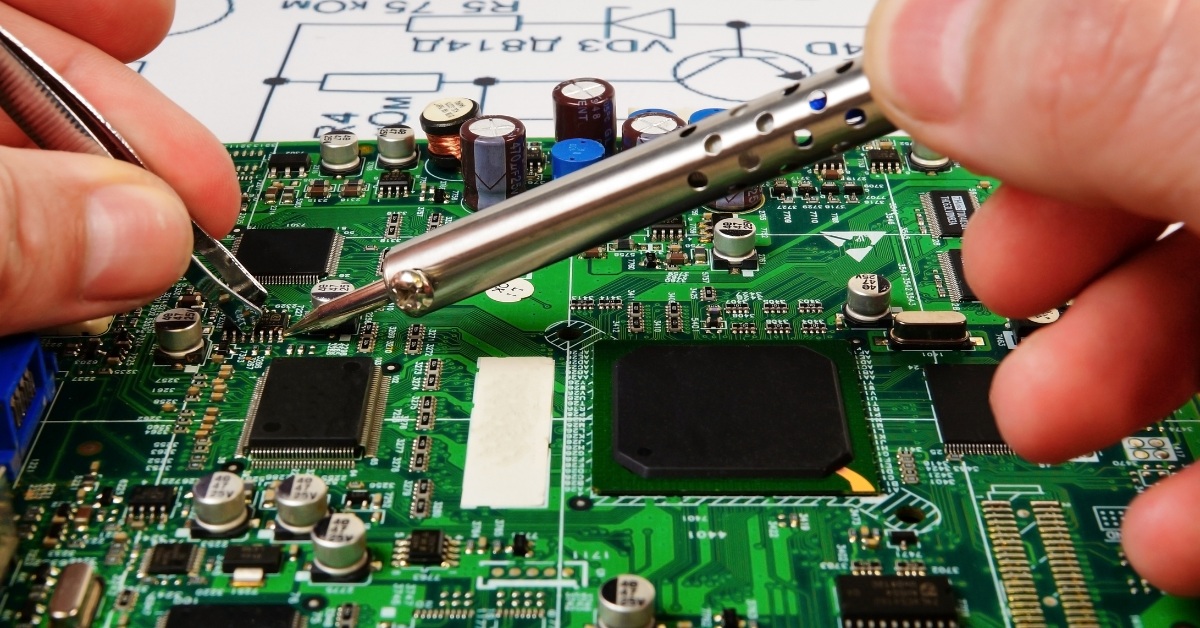
  • Industry Anticipates Stronger Emphasis on Electronics Manufacturing from New Government

    Industry Anticipates Stronger Emphasis on Electronics Manufacturing from New Government

    display manufacturing

    Industry Anticipates Stronger Emphasis on Electronics Manufacturing from New Government

    The industry is optimistic that the new government will support the localization of component production and help homegrown brands excel on the global stage.

    In his inaugural address following the General Elections, where the BJP fell short of a majority but secured the halfway mark with its allies, Narendra Modi expressed confidence in securing a third consecutive term. Remaining true to his pre-election promises, Modi reiterated his commitment to advancing the agenda established during the past decade. The NDA government has introduced several production-linked incentive (PLI) schemes for mobile phones, IT hardware, and other sectors to realize its vision of a self-reliant India. In his third term, Modi aims to strengthen production in the electronics and semiconductor industries. During his address, Modi stated, “We made India the second-largest smartphone manufacturer. Now, we will increase work in semiconductors and electronics production sectors.”

    The industry is encouraged by this sentiment.

    Amit Khatri, Co-Founder of the homegrown wearable company Noise, commented, “We trust that the new administration will significantly advance India’s electronic manufacturing sector. Guided by the vision of Aatmanirbhar Bharat, we also hope for government support in localizing component production and creating an environment where homegrown brands can lead India on the global stage. We are optimistic about the future and are ready to collaborate with the new government to make India a global leader in the smart wearable industry, driving economic growth, creating jobs, and delivering innovative products that enhance the lives of millions.”

    While India has made strides in smartphone manufacturing and with laptops and PCs also being produced locally, the wearable and TV industries are also expecting a significant push from the new government. In recent years, many Indian companies have already begun manufacturing and assembling their products locally in response to the Make in India initiative.

    Varun Gupta, Co-Founder of Boult, noted, “The robust growth of India’s manufacturing sector, serving as the primary driver amidst a global slowdown, underscores the nation’s resilience with over 8.2% GDP growth. Particularly, the electronics sector is poised to transcend mere import substitution and evolve into a formidable export hub. The PLI scheme tailored for hearables and wearables is poised to play a pivotal role in realizing the government’s ambitious export targets, providing a substantial boost to the sector’s competitiveness and contribution to the global market.”

    Continued adherence to policies and a dedicated focus on infrastructure initiatives is seen as crucial for the industry.

    Avneet Singh Marwah, CEO of SPPL, a contract manufacturer for TVs, washing machines, and ACs in India, stated, “Our industry thrives on stability and conducive policies. We look forward to a government committed to fostering innovation, streamlining regulations, and investing in infrastructure. Expedited project completions and a reduction in GST on televisions and air conditioners from 28% to 18% will further propel our sector’s growth, enabling us to contribute significantly to India’s economic progress. Together, with the right governmental support, we aim to drive not just our company’s success but also contribute significantly to India’s journey towards becoming a global electronics hub.”

  • India now has 4.5 crore registered MSMEs of which 98% are micro enterprises

    India now has 4.5 crore registered MSMEs of which 98% are micro enterprises

    SME

    India now has 4.5 crore registered MSMEs of which 98% are micro enterprises

    Of the 4.5 crore MSMEs, 4.4 crore or 98.1 per cent enterprises were micro units followed by 7.04 lakh small enterprises and 67,266 medium enterprises.
    The total number of micro, small and medium enterprises (MSMEs) in the country registered with the MSME Ministry has crossed the 4.5 crore mark. According to the data from the government’s Udyam registration portal launched on July 1, 2020, to ease registration of small businesses in the country, 4,50,64,147 units were registered with the MSME Ministry, at the time of filing this report.

    Of the 4.5 crore MSMEs, 4.4 crore or 98.1 per cent enterprises were micro units followed by 7.04 lakh small enterprises and 67,266 medium enterprises. The micro enterprise count also included 1.86 crore micro enterprises outside the ambit of the Goods and Services Tax (GST) such as street vendors, registered via the Udyam Assist Platform launched in January 2023.
    Importantly, according to the 2015-16 national sample survey by the government, India has 6.33 lakh crore unincorporated non-agriculture MSMEs. The current count of registered MSMEs indicates that 71 per cent of unincorporated non-agri MSMEs are now in the formal economic fold.

    Before Udyam registration, the government had the Udyog Aadhaar Memorandum (UAM) and prior to that Entrepreneurs Memorandum (EM-II) in place for MSME registration. According to the MSME Ministry’s 2020-21 annual report, 21,96,902 EM-II filings were recorded during the 2007-2015 period while from September 2015 till June 30 2020, there were 1,02,32,451 (1.02 crore) UAM registrations.

    The Udyam registration for MSMEs offers benefits including registration on the government’s e-commerce marketplace GeM, delayed payment monitoring portal Samadhaan, onboarding on the TReDS platform for invoice discounting, availing schemes such as credit guarantee scheme, public procurement, priority sector lending from banks and more.

    However, wholesale and retail traders registering for Udyam certification are limited to the benefits of priority sector lending.

    According to the details from the Udyam portal, the registered MSMEs have so far reported 19.5 crore jobs and the number of women employees is over 4.3 crore.

  • DoT Launches Baseline Survey for MSMEs, Emphasizing Digital Evolution with 5G

    DoT Launches Baseline Survey for MSMEs, Emphasizing Digital Evolution with 5G

    5G

    DoT Launches Baseline Survey for MSMEs, Emphasizing Digital Evolution with 5G

    The Department of Telecommunications (DoT) has invited proposals from organizations and startups to develop a comprehensive Industry 4.0 baseline survey focused on the digital transformation of India’s MSME sector through 5G technologies. This survey aims to evaluate the current readiness of MSMEs in the manufacturing sector for Industry 4.0, identifying areas for improvement and prioritizing investments.

    Industry 4.0 represents a major transformation in manufacturing, driven by advanced technologies like artificial intelligence, the Internet of Things (IoT), and cloud computing to boost efficiency, productivity, strategy, and competitiveness. The Telecom Centre of Excellence India, a public-private partnership initiative, is spearheading the survey to understand the challenges MSMEs face in adapting to these technologies.

    “The survey aims to establish a robust ecosystem that can leverage the capabilities of 5G and 6G networks. This includes identifying sector-specific needs in at least 10 sectors, recognizing the diverse landscape of MSMEs, and providing targeted support to foster innovation and competitiveness,” the department stated.

    The survey is designed to address immediate barriers to digital transformation and pave the way for the integration of cyber-physical systems through 5G and 6G technologies, driving sustainable growth across sectors. It will cover five sectors each in the northern and southern parts of India over a 60-day period. The key recommendations from the survey will inform policy interventions to achieve the transformative adoption of Industry 4.0, enhancing the competitive positioning and survivability of MSMEs.

  • OpenAI and Google DeepMind Employees Warn About AI Risks

    OpenAI and Google DeepMind Employees Warn About AI Risks

    AI

    OpenAI and Google DeepMind Employees Warn About AI Risks

    An open letter from a group of current and former employees at AI companies, including OpenAI and Google DeepMind, has raised concerns about the risks posed by emerging AI technology. This letter adds to the growing calls for addressing safety concerns around generative AI, which can rapidly produce human-like text, images, and audio at low cost.

    The letter, signed by 11 current and former OpenAI employees and one current and another former Google DeepMind employee, asserts that the financial motives of AI companies hinder effective oversight. “We do not believe bespoke structures of corporate governance are sufficient to change this,” the letter states.

    The signatories warn of risks associated with unregulated AI, including the spread of misinformation, loss of independent AI systems, and deepening inequalities, potentially leading to “human extinction.”

    Researchers have identified instances of image generators from companies like OpenAI and Microsoft producing voting-related disinformation despite policies against such content. The letter criticizes AI companies for having “weak obligations” to share information with governments about their systems’ capabilities and limitations, suggesting that these firms cannot be relied upon to voluntarily share such information.

    The group urges AI firms to establish processes for current and former employees to raise concerns about risks and to refrain from enforcing confidentiality agreements that prevent criticism.

    Separately, OpenAI reported that it disrupted five covert influence operations that attempted to use its AI models for deceptive activities online.

  • Holani Group Secures ₹184 Crore for New SME-Focused Fund

    Holani Group Secures ₹184 Crore for New SME-Focused Fund

    New SME-Focused Fund

    Holani Group Secures ₹184 Crore for New SME-Focused Fund

    The Holani Group has entered the fund management and investment sector following the Securities and Exchange Board of India (SEBI) approval for its Alternate Investment Fund earlier this year. Jaipur-based merchant banker and stockbroker Holani Consultants has raised ₹184 crore for its new SME-focused ₹300 crore fund, launched in late April.

    The fund includes a greenshoe option to retain an additional ₹100 crore.

    “With our sector-agnostic strategy, we aim to create long-term value for our clients while fostering innovation, entrepreneurship, and economic growth in India through our fund,” said Ashok Holani, Director of Holani Consultants Private Limited.

    The venture capital fund, Holani Venture Capital Fund Category I AIF (Alternate Investment Fund), is an Indian growth capital private equity fund managed and sponsored by Holani Capital Advisors. The fund is now registered under SEBI as a Category I AIF – Venture Capital Fund.

    The fund offers investment opportunities to individuals, including high net worth individuals, corporates, institutional investors, financial institutions, family offices, insurance companies, foreign investors, other alternative investment funds, and other permissible investors.

  • Trent plans global retail push after acing it in India

    Trent plans global retail push after acing it in India

    Trent

    Trent plans global retail push after acing it in India

    Noel Tata-led Trent is venturing into international markets with a flagship store in Dubai, targeting the Indian diaspora. Zudio, a key brand, has surpassed ₹7,000 crore in revenue in India. The company experienced another year of substantial growth in FY24, with net sales increasing by 50% to ₹12,375 crore and net profit nearly quadrupling to ₹1,477 crore.

    Riding the wave of its success in the domestic retail market, Noel Tata-led Trent is exploring opportunities to set up its retail formats outside Indian shores, beginning with a flagship store in Dubai, said people in the know. This move comes as Zudio, one of its flagship brands, surpasses the ₹7,000-crore revenue mark in India.

    Trent had earlier deferred its global ambitions to consolidate domestic operations. Now, with a robust and profitable business model in place, the traditionally conservative retailer is now seeking to tap the substantial Indian diaspora overseas, becoming the first retailer to do so, the people said. It may consider an international ally for possible partnerships, though that is unconfirmed. Chief executive officer P Venkatesalu said the company, as previously, continues to explore possibilities .
    According to industry watchers, Trent has cracked a sustainable and profitable business model and has now gained the confidence to scale up abroad.
    Trent’s consolidated revenue has increased at a five-year compound annual growth rate of 45%, reaffirming its growth strategy driven by agile on-ground execution. Amid an apparel slowdown, Trent stands out as an anomaly, consistently delivering positive surprises in both revenue and profit margin.

    The company reported another strong growth year in FY24, with net sales surging 50% to ₹12,375 crore and net profit rising nearly fourfold to ₹1,477 crore. This robust performance was driven by a combination of strong like-for-like growth, aggressive expansion of Zudio stores and significant traction in emerging categories such as beauty and personal care, innerwear, and footwear.

    In the March 2024 quarter, its fashion apparel brand Westside unit added 12 stores, bringing the total store count to 232, while value fashion concept Zudio opened 86 new stores, taking its total count to 545.


    Shares of Trent gained 192% in the last one year and 305% over two years, compared with gains of 10% and 18% in the Sensex during the same periods.

    Trent was the top performer among all the Tata Group stocks during these periods.

    The only retailer pursuing an unconventional ‘own brands’ strategy, Trent had accelerated the expansion of its key formats – Westside, Zudio and Star Bazaar.


    Westside and Zudio are like two siblings playing in the fashion space. They vary on product, design, fabric, etc., but are still relevant at different price points. Moreover, the learnings from Westside helped build a strong Zudio model and the backend integration of the two brands is helping both businesses deliver synergistic growth,” Venkatesalu told ET.

    Trent’s brands are not sold on any other ecommerce websites except Tata platforms (Tata Neu and TataCliq). The Zudio format today contributes as much as 30% to total revenue compared with only 8% a few years back.


    The retailer is applying the same strategy at the Star Bazaar business in the food and grocery space and is witnessing some very strong customer traction.

    It has consistently delivered robust financial results, boasting 31% and 26% compound annual growth rates (CAGR) in revenue and profit, respectively, over the past five years. Trent is now seen by its management team as a platform that allows to originate, incubate and scale a portfolio of growth engines.

  • Exploring the Impact of India’s Evolving GCC Landscape on Fintech Innovation for SME Sector Growth

    Exploring the Impact of India’s Evolving GCC Landscape on Fintech Innovation for SME Sector Growth

    SME Sector

    Exploring the Impact of India’s Evolving GCC Landscape on Fintech Innovation for SME Sector Growth

    Through inventive strategies and cooperative endeavors, Global Capability Centers (GCCs) are playing a pivotal role in developing pioneering products and services aimed at fostering financial inclusivity.

    Initially established to capitalize on India’s cost-effectiveness, GCCs have evolved into crucial hubs for driving innovation and development across various sectors. Leveraging India’s technological prowess and skilled workforce, these centers offer a spectrum of services, including tech research, finance, audit, and operational support for their parent organizations worldwide.

    The SME sector has long grappled with limited access to credit. Fintech innovation, powered by advanced technologies like artificial intelligence (AI), machine learning (ML), blockchain, and big data analytics, holds the key to addressing this challenge. With access to a diverse talent pool comprising engineers, data scientists, and banking experts, GCCs are well-positioned to lead innovation in areas such as digital payments, lending, risk management, and customer engagement. This influx of talent not only benefits multinational corporations but also enriches the broader finance ecosystem on a global scale.

    For instance, JP Morgan’s Bengaluru global service center is expanding its scope to develop digital transformation solutions for its global operations. The team in India has created Story, a platform facilitating commercial real estate management, rent processing, market analysis, and tenant screening for smaller multifamily owner-operator businesses.

    GCC-driven advancements enable the swift delivery of customer-centric personalized solutions, streamline banking platforms, and transform payment and lending solutions. These digital innovations are particularly beneficial for small businesses, which often require timely access to capital to seize growth opportunities or address cash flow challenges.

    Moreover, GCCs foster knowledge sharing and collaboration among diverse business units. NatWest’s India centers, for example, collaborate closely with UK teams on core engineering projects, driving digital transformation and enhancing accessibility to banking services for customers.

    Additionally, GCCs and fintech companies in the BFSI sector collaborate in areas such as digital lending, payments, and risk monitoring to adapt to the evolving financial landscape. GCCs prioritize upskilling their talent in emerging tech areas to stay abreast of evolving technologies.

    In conclusion, India’s GCCs are driving digital transformation and fostering financial inclusion through innovative strategies and collaborative efforts, shaping the fintech landscape to better serve the needs of SMEs and other stakeholders.

  • Pharma and Electronics Manufacturing to Receive Boost in Modi 3.0

    Pharma and Electronics Manufacturing to Receive Boost in Modi 3.0

    Pharma and electronics

    Pharma and Electronics Manufacturing to Receive Boost in Modi 3.0 Era

    With the BJP anticipated to secure a significant portion of seats in UP, Gujarat, Maharashtra, Telangana, and Himachal Pradesh, industry leaders foresee a continued emphasis on local manufacturing. These states serve as major manufacturing hubs for Active Pharmaceutical Ingredients (APIs) and electronic goods.

    As the exit poll results indicate a clear victory for Prime Minister Narendra Modi-led BJP government at the center, stakeholders from sectors like pharmaceuticals, medical devices, and electronics manufacturing anticipate a substantial push for local production.

    According to the India Today-Axis My India exit poll, the BJP is expected to sweep all seats in Gujarat and Himachal Pradesh, as well as over 60 percent and 70 percent of Lok Sabha seats in Maharashtra and Telangana, respectively. These states play a pivotal role as manufacturing hubs for pharmaceuticals and medical devices. Additionally, the BJP is predicted to secure over 85 percent of seats in Uttar Pradesh and Andhra Pradesh, two states along with Telangana that are crucial for electronics manufacturing in the country.

    Boost for Pharma:

    A robust performance is anticipated by the BJP-led National Democratic Alliance (NDA) in key states, driven by a manifesto emphasizing the manufacturing of Active Pharmaceutical Ingredients (APIs) and advancing research. Raj Prakash Vyas, President-Corporate Affairs at Cadila Pharmaceuticals, highlighted potential benefits such as the expansion of PLI schemes to encourage domestic manufacturing and stringent quality control measures to combat spurious drugs.

    Vyas proposed the establishment of an Innovation Task Force (ITF) dedicated to pharmaceuticals, comprising experts from various fields, to accelerate the development and adoption of innovative solutions. Yogesh Mudras, Managing Director at Informa Markets, noted India’s leadership in the pharmaceutical industry and stressed the need for further investments in research and rural healthcare.

    Tuhin A Sinha, National Spokesperson for BJP, remarked that the exit polls support the PM’s vision of Viksit Bharat (developed India) and are positive for the pharmaceutical and healthcare sectors, where India has emerged as a global leader.

    India as an Electronics Hub:

    With the BJP government at the center and gaining influence in major manufacturing hubs like UP, AP, and Telangana, the industry expects further impetus to transform India into a major hub for electronic exports. The government’s PLI scheme has attracted leading players to set up new plants, increasing capacity in areas like mobile handsets, LEDs, and components for air conditioners.

    Avneet Singh Marwah, CEO of Superplastronics, emphasized the importance of policy continuity and infrastructure development to support the industry. He also called for a reduction in GST rates on household items like TVs and ACs to stimulate demand.

    Rajiv Nath, forum coordinator of the Association of Indian Medical Device Industry (AiMeD), anticipates government support to enhance medical device manufacturing, advocating for a predictable tariff regime and fair pricing practices.

  • Why Sustainability Reporting Matters for SMEs

    Why Sustainability Reporting Matters for SMEs

    Small Business, Big Impact: Why Sustainability Reporting Matters for SMEs

    A new guide from ACCA (the Association of Chartered Certified Accountants) recognizes the vital role Small and Medium-sized Enterprises (SMEs) play in global supply chains. Their guide, titled “Sustainability Reporting – SME Guide,” empowers SMEs to create the sustainability reports increasingly demanded by regulators and stakeholders.

    Sundeep Jakhar, head of public affairs for ACCA in India, emphasizes the importance of sustainability practices for Indian SMEs, which make up a significant portion of the Indian business landscape. He acknowledges their unique challenges, such as limited resources, but highlights the numerous benefits sustainability reporting can unlock, including access to new markets and better financing opportunities. This translates to improved competitiveness on a global scale for Indian SMEs, helping them align with international standards.

    Report co-author Sharon Machado, head of sustainable business at ACCA, explains that creating and using sustainability information empowers SMEs, their advisors, and stakeholders to identify opportunities, manage risks, and ultimately strengthen their financial position. This translates to easier investment attraction, preferential terms with suppliers, and a competitive edge in the talent pool.

    As the demand for sustainability information rises, all organizations, including SMEs (which comprise 90% of all organizations globally), need to be prepared to provide information on their approach to managing sustainability risks and opportunities. This information is crucial for regulators, investors, and other stakeholders throughout the value chain.

    The ACCA guide highlights the competitive advantage SMEs can gain by communicating and using sustainability information. Report co-author Aaron Saw, head of corporate reporting insights at ACCA, acknowledges the challenges SMEs might face, especially financially. However, he emphasizes that evidence shows the effort is worthwhile. The ACCA encourages all SMEs to take small but crucial first steps towards creating sustainability reports, paving the way for a stronger and more competitive business.


    You can read here to learn more: https://smefutures.com/sustainability-related-information-enables-better-business-for-smes-says-new-guide-from-acca/

Login