Tag: news

  • RBI Governor Recommends a Balanced Multi-Sectoral Focus

    RBI Governor Recommends a Balanced Multi-Sectoral Focus

    Reserve bank of India

    RBI Governor Recommends a Balanced Multi-Sectoral Focus Amid Manufacturing vs. Services Debate

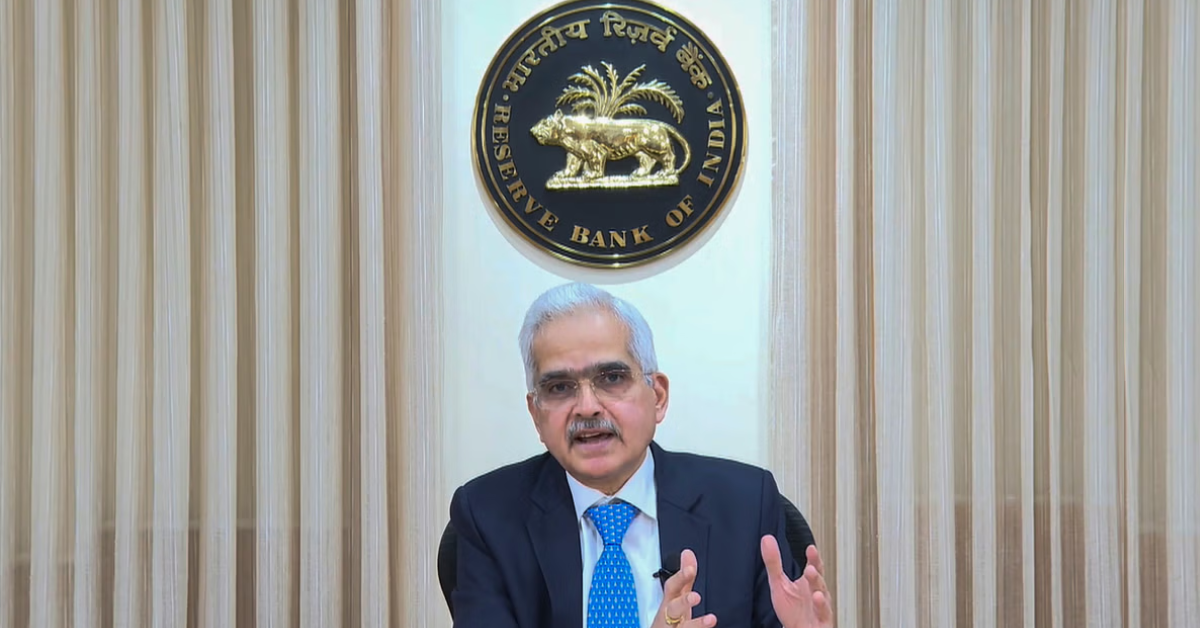
    Speaking at an event in Delhi, Reserve Bank of India (RBI) Governor Shaktikanta Das highlighted India’s potential growth rate at 7.5% and projected that the economy could “eventually” grow at 8%, adding that growth for the current year is expected to be 7.2%.

    At a time when many policymakers and economic experts are debating whether India should prioritize manufacturing or services to drive economic growth, Das took a middle-ground approach. He emphasized that the country should not limit itself to one sector but instead focus on a multi-sectoral strategy.

    Das stated that India’s economy, with its diverse sectors and 1.4 billion population, must embrace a balanced approach. “For a large country like India, with a diverse economy and many sectors and sub-sectors, each sector plays its own important role. So, India has to adopt a multi-sectoral approach,” he said during his speech at the Capital Foundation Society (CFS) awards event, where he was honored with a lifetime achievement award.

    His remarks come amid prominent debates in economic circles. Former RBI Governor Raghuram Rajan has voiced concerns over India’s heavy focus on manufacturing at the expense of the services sector, which he believes has greater potential due to the country’s strong human capital. Rajan argued that India’s services industry could offer a more sustainable and climate-friendly path to growth. In contrast, Finance Minister Nirmala Sitharaman has stressed the need for India to enhance its presence in global manufacturing, stating that the sector must grow to help India become self-reliant and benefit from the post-pandemic shift in global supply chains away from China.

    Das acknowledged both sides of the debate, noting that reforms such as the Production-Linked Incentive (PLI) scheme and the One Nation One Product (ODOP) initiative are already supporting the manufacturing sector. However, he also recognized the strengths of India’s services sector, particularly in areas like Global Capability Centres, where Indian entrepreneurship thrives.

    Additionally, Das stressed the importance of continuing the country’s reform momentum, particularly in areas like land, labor, and agricultural marketing, to further bolster economic growth.

    Regarding overall growth, Das expressed optimism about India’s economic resilience at a time when global growth is slowing and the economic drivers are shifting from developed nations to emerging markets. “The potential growth rate for India over the medium-term, which is the next three to four years, stands at 7.5%. This year, we estimate growth at 7.2%, but eventually, the Indian economy has the capability to grow at 8%,” he said, while adding that this assessment is conservative and measured.

    Das’s forecast comes in the midst of contrasting views from other economic commentators, such as Axis Bank chief economist Neelkanth Mishra, who believes that sustained growth at 8% is unlikely, with 7% being a more realistic target. Nonetheless, Das remains cautiously optimistic about India’s long-term economic potential.


  • Digital Competition Bill Could Undermine MSME Ecosystem, Say Small and Medium Businesses

    Digital Competition Bill Could Undermine MSME Ecosystem, Say Small and Medium Businesses

    Digital Competition Bill

    Digital Competition Bill Could Undermine MSME Ecosystem, Say Small and Medium Businesses

    Members of the India SME Forum, the largest association of SMEs in the country, expressed concerns that the Digital Competition Bill (DCB) could adversely affect the MSME ecosystem and hinder India’s Viksit Bharat goals.

    The industry body, representing small and medium enterprises (SMEs), warned on August 7 that the DCB could deter foreign direct investment (FDI) and limit the global competitiveness of MSMEs.

    The Indian SME Forum hosted a roundtable in New Delhi to discuss the potential implications of the DCB on MSMEs and startups. The draft of the DCB, which was released in February, aims to address anti-competitive practices by Big Tech. However, it has faced widespread criticism from Indian businesses and startups, who argue that the bill could negatively impact their operations.

    Vinod Kumar, President of the India SME Forum (ISF), emphasized during the roundtable that India has a unique opportunity to benefit from companies moving out of China. “Any regulation like the DCB could become a stumbling block in attracting FDI and promoting the global competitiveness of MSMEs,” Kumar stated.

    Kumar also highlighted MSMEs’ concerns over the proposed ex-ante regulations—measures introduced in anticipation of certain impacts—especially those related to the use of personal data.

    Aditi Madan, founder of Blue Pine Foods, stressed the importance of ensuring that SMEs have access to relevant information in the digital market economy. “Policy priorities should focus on directly engaging with SMEs during the creation process to ensure their needs and perspectives are adequately addressed,” she said.

    Debashish Das, CEO of ElenchusHR Solutions, warned that overly stringent regulations could push businesses back to manual processes “reminiscent of the 70s and 80s,” hindering progress.

    Amit Agrawal, founder of DSI Robotics, echoed these concerns, stating, “The Digital Competition Bill presents a safety paradox and could impose an undue compliance burden on small businesses, as has happened in the past.”

  • India’s Manufacturing Sector Growth Slows in July Amid Softer Orders and Output

    India’s Manufacturing Sector Growth Slows in July Amid Softer Orders and Output

    manufacturing sector

    India’s Manufacturing Sector Growth Slows in July Amid Softer Orders and Output

    New Delhi: India’s manufacturing activity eased slightly in July due to softer increases in new orders and output, following a recovery in June from a three-month low in May.

    The HSBC final India Manufacturing Purchasing Managers Index (PMI), compiled by S&P Global, recorded 58.1 in July, compared to 58.3 in June, 57.5 in May, and 58.8 in April. This index is based on responses from around 400 manufacturers.

    Although the July reading was marginally lower than the flash projection of 58.5 released last month, it remained above both its long-term average and the 50-point threshold separating contraction from expansion, marking nearly three years of continuous growth.

    “India’s manufacturing sector continued to post impressive growth in July, despite slightly softer increases in new orders and output. Key positive developments included one of the fastest expansions in international sales in over 13 years and another robust round of job creation,” the report stated.

    However, strong demand also led to price pressures, with input costs rising at one of the quickest rates in nearly two years, resulting in the steepest increase in selling prices since October 2013.

    Buoyant Demand

    The report highlighted that buoyant demand had a positive ripple effect across the manufacturing industry, particularly through a substantial increase in new work intakes. Despite a slowdown since June, the pace of sales growth remained sharp, with production volumes significantly raised at the start of the second fiscal quarter.

    “India’s headline manufacturing PMI showed a marginal slowdown in the pace of expansion in July, but with most components remaining at robust levels, the small drop is no cause for concern,” said Pranjul Bhandari, chief India economist at HSBC. “New export orders remain a bright spot… The continuous increase in the output price index, driven by input and labor cost pressures, may signal further inflationary pressure in the economy.”

    Normal Monsoon Predicted

    The Reserve Bank of India (RBI) has raised its FY25 GDP growth forecast from 7% to 7.2%, supported by improved rural and urban demand and predictions of a normal monsoon. These monsoon predictions are positive for agricultural output growth, with robust government capital expenditure, strong investment demand, and upbeat consumer and business sentiment contributing to the resilience of the Indian economy. However, geopolitical tensions and divergent monetary policies of major central banks have increased uncertainty.

    In its June meeting, the RBI’s Monetary Policy Committee kept the benchmark rate at 6.25%. Retail inflation, which spiked to a four-month high of 5.08% in June, poses a challenge for policymakers aiming to reduce interest rates. The rise in June was mainly due to higher food inflation, which accounts for nearly 40% of the consumer price basket.

    The PMI report noted that Indian goods producers raised selling prices to protect margins from cost increases. Firms cited higher fees for raw materials, increased labor costs, and strong demand as reasons for the upward adjustments to output charges.

    “Amid reports of strengthening demand from clients based in Asia, Europe, North America, and the Middle East, Indian manufacturers experienced a robust increase in international sales during July,” the report added.

  • SEBI orders probe against SME IPO merchant banker for alleged violations while managing issues: Report

    SEBI orders probe against SME IPO merchant banker for alleged violations while managing issues: Report

    SEBI

    SEBI orders probe against SME IPO merchant banker for alleged violations while managing issues: Report

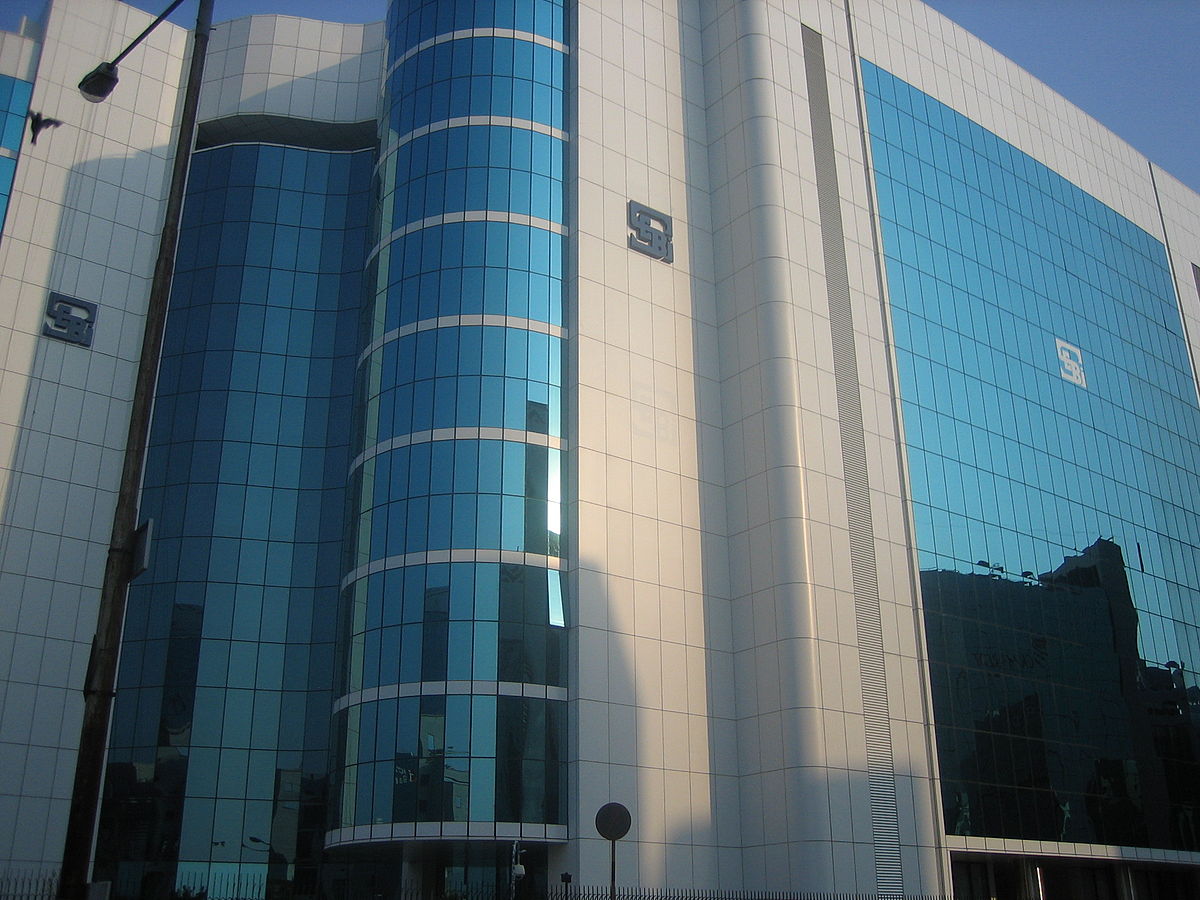
    SEBI ordered an inspection of Corporate Capital Ventures and probed the operations and activities of the entity and its directors between August 2022 and June 2024.

    Capital markets regulator Securities and Exchange Board of India (SEBI) is reportedly investigating Corporate Capital Ventures Limited. The Delhi-based merchant banker, which has managed some initial public offers (IPOs) of small and medium enterprises (SMEs), has come under the regulatory scanner for alleged violations of merchant banking regulations while managing public issues.

    According to a report by news website Moneycontrol, SEBI has issued a notice to the merchant banking entity and named the company’s directors – Kulbhushan Parashar and Harpreet Kaur – along with a few other entities in the notice. The report added that the market watchdog’s investigation was triggered after it received an anonymous complaint alleging that Kulbhushan Parashar, through his relatives, bought shares in companies before taking them public.

    SEBI ordered an inspection of the firm and probed the operations and activities of the entity and its directors between August 2022 and June 2024. During this period, Corporate Capital Ventures acted as the merchant banker for six SME IPOs: Oriana Power, Annapurna Swadisht, Droneacharya Aerial Innovations, Crayons Advertising, Creative Graphics Solutions India, and Rocking Deals Circular Economy.

    According to the anonymous complaint received by SEBI, relatives of Kulbhushan Parashar were allotted 25,000 equity shares of Oriana Power on a private placement basis and 25,000 bonus shares. The allotment was made to Jagdish Kumar Prasad, and the IPO prospectus of Rockingdeals has listed Prasad as an immediate relative of Kulbhushan Parashar.

    NSE imposes price control cap of 90% on SME IPO
    Last month, NSE imposed a 90 per cent price control cap on SME IPOs amid rising concerns about froth in lesser-known SME stocks. “To standardise the opening price discovery and equilibrium price across exchanges during the special pre-open session for IPO on the SME platform, it has been decided to put an overall capping of up to 90 per cent over the issue price for SME IPOs,” said NSE in a circular.

    The market regulator is already working on strengthening the eligibility criteria for the segment to ensure that fundamentally strong companies enter the market through the SME platform, launched in 2012. Earlier this year, SEBI chairperson Madhabi Puri Buch said some issuers and bankers were misusing the framework provided for SME listing. According to Buch, SEBI is collecting evidence following complaints of price manipulation in the segment.


  • India Elected Vice-Chair of Indo-Pacific Supply Chain Council

    India Elected Vice-Chair of Indo-Pacific Supply Chain Council

    IPEF

    India Elected Vice-Chair of Indo-Pacific Supply Chain Council

    India has been elected as Vice-Chair of the Supply Chain Council, the Commerce and Industry Ministry announced on Wednesday.

    In a significant milestone, the 14 partner countries of the Indo-Pacific Economic Framework (IPEF) have established three councils to enhance economic cooperation in the region. Under the Indo-Pacific Economic Framework for Prosperity (IPEF) Agreement related to Supply Chain Resilience, this step is seen as a move to find alternatives to China for the production of goods.

    The inaugural virtual meetings of the Supply Chain Council (SCC), Crisis Response Network (CRN), and Labor Rights Advisory Board (LRAB) marked a major advancement in cooperation among partner countries for strengthening supply chain resilience in the region, according to the Commerce Ministry.

    During these meetings, the 14 IPEF partners reaffirmed their commitment to closer cooperation to enhance the resilience and competitiveness of critical supply chains, preparing for and responding to supply chain disruptions that threaten economic prosperity while strengthening labor rights.

    India is expected to play a crucial role in developing a resilient Supply Chain in the Indo-Pacific region. In June 2024, at the IPEF Ministerial meeting in Singapore, Secretary of the Department of Commerce, Sunil Barthwal, highlighted India’s potential to become a major player in the global supply chain due to its skilled manpower, natural resources, and policy support. Government initiatives are actively seeking solutions to ensure India’s participation in diverse and predictable supply chains.

    As part of the Supply Chain Agreement, the IPEF partners established three supply chain bodies: a Supply Chain Council to focus on strengthening supply chains for critical sectors and goods, a Crisis Response Network to facilitate a collective emergency response to disruptions, and a Labor Rights Advisory Board to strengthen labor rights and workforce development across regional supply chains.

    India shared its views on the importance of a resilient supply chain network and ongoing consultations with stakeholders on critical sectors from the perspective of national security, public health, and economic well-being. Emphasis was placed on collaboration in the skill development sector, identifying gaps, and ensuring the right skills across economies, including technical assistance for workforce development and digitalization for a resilient supply chain ecosystem.

    During the meetings, each of the three supply chain bodies elected a Chair and Vice Chair for a term of two years. The elected chairs and vice chairs are:
    – Supply Chain Council: USA (Chair) and India (Vice Chair)
    – Crisis Response Network: Republic of Korea (Chair) and Japan (Vice Chair)
    – Labor Rights Advisory Board: USA (Chair) and Fiji (Vice Chair)

    The Supply Chain Council adopted Terms of Reference and discussed initial work priorities, which will be further explored at its first in-person meeting in Washington, D.C., in September 2024 during the Supply Chain Summit. The Crisis Response Network discussed priorities, including conducting a tabletop exercise, and planned its first in-person meeting alongside the Supply Chain Summit. The Labor Rights Advisory Board discussed priorities for strengthening labor rights across IPEF supply chains and focused on labor provisions in the IPEF Clean Economy Agreement and Fair Economy Agreement.

    The IPEF partners emphasized the importance of the upcoming in-person meeting in Washington, D.C., in September 2024.

    Launched on May 23, 2022, in Tokyo, the IPEF includes 14 partner countries: Australia, Brunei, Fiji, India, Indonesia, Japan, Republic of Korea, Malaysia, New Zealand, Philippines, Singapore, Thailand, Vietnam, and the USA. The IPEF aims to strengthen economic engagement and cooperation among its member countries, promoting growth, economic stability, and prosperity in the region.

  • High Returns and Government Support Drive AIFs to Explore SME-Focused IPOs

    High Returns and Government Support Drive AIFs to Explore SME-Focused IPOs

    Alternate Investment Fund

    High Returns and Government Support Drive AIFs to Explore SME-Focused IPOs

    Approximately 900 SMEs are now listed on the SME platforms of both the National Stock Exchange and the BSE, with significant traction observed over the past 2-3 years.

    The recent success of Initial Public Offerings (IPOs) for Small and Medium Enterprises (SMEs), coupled with robust government support, has spurred Alternative Investment Funds (AIFs) to tap into this lucrative sector.

    An AIF is a fund established or incorporated in India, functioning as a privately pooled investment vehicle.

    Paradise Moon Investment Fund, an AIF, has announced its launch with the goal of raising Rs 750 crore over the next few years, targeting investors keen to leverage the growth of the SME market both pre- and post-IPOs. The fund aims to provide investors with a unique opportunity to benefit from the expanding Indian stock market and capitalize on the dynamic landscape of SME IPOs, according to an official statement.

    With around 900 SMEs now listed on the SME platforms of both the National Stock Exchange and the BSE, significant traction has been observed over the past 2-3 years. Naveen Bansal, Managing Director of Paradise Moon, stated, “We seek to invite investment in Category 1 Alternative Investment Fund (AIF), with the visionary goal of becoming a leading investor in SME (pre and post) IPOs. The SME sector has witnessed notable expansion and development, contributing to a third of Gross Domestic Product (GDP).”

    The BSE SME Index has delivered annualized gains of up to 195 percent over the past decade. A Rs 1,000 investment in September 2013 would be worth Rs 1.03 lakh in 2023, representing a 100x return, Bansal added.

    Officials noted that the growth and returns in the SME sector are expected to surpass those of larger companies on the main exchange board due to concerns over stretched valuations.

    As part of the ‘Aatmanirbhar Bharat’ package, the government announced a Rs 50,000 crore equity infusion for MSMEs through a Fund of Funds in July 2023 under the Self-Reliant India (SRI) Fund. Led by NSIC Venture Capital Fund, this initiative aims to provide equity funding to MSMEs with the potential and viability to grow into large enterprises. The government has provisioned Rs 10,000 crore, with the remainder coming from private venture funds.

  • Incentives Worth Rs 9,721 Crore Claimed Under PLI Scheme for Nine Sectors: Piyush Goyal

    Incentives Worth Rs 9,721 Crore Claimed Under PLI Scheme for Nine Sectors: Piyush Goyal

    PLI scheme

    Incentives Worth Rs 9,721 Crore Claimed Under PLI Scheme for Nine Sectors: Piyush Goyal

    Commerce and Industry Minister Piyush Goyal informed the Lok Sabha on Tuesday that incentives amounting to Rs 9,721 crore have been claimed under the Production Linked Incentive (PLI) scheme for nine sectors, including electronics manufacturing and pharmaceuticals. Actual investments totaling Rs 1.23 lakh crore have been realized by March 2024, resulting in incremental production or sales of over Rs 10.31 lakh crore and the creation of approximately 8 lakh jobs.

    In a written reply, Goyal detailed that the incentives were claimed for sectors such as large-scale electronics manufacturing, IT hardware, bulk drugs, medical devices, pharmaceuticals, telecom and networking products, food processing, white goods, and drones and drone components.

    The PLI schemes aim to attract both domestic and foreign investments in key sectors and advanced technologies, ensure efficiency, and bring economies of size and scale to the manufacturing sector, making Indian companies globally competitive. Goyal noted that there is increasing foreign investment in several PLI sectors, highlighting Apple’s shift of its suppliers, including Foxconn, Wistron, and Pegatron, to India.

    He added that most projects are in the implementation stage and will be filing incentive claims in due course. To further enhance the performance and sentiment of applicants, the government plans to settle PLI claims quarterly, which is expected to improve cash flow, accelerate the disbursement of incentives, and enhance fund utilization efficiency.

    Additionally, Minister of State for Commerce and Industry Jitin Prasada informed the Parliament that India has granted Geographical Indications (GI) tags to 643 products as of July 24 this year. A GI tag, valid for 10 years and renewable thereafter, prevents any person or company from selling a similar item under the registered name. This tag assures quality and distinctiveness attributable to the product’s place of origin.

    Prasada also mentioned that the Indian Patent Office granted 1,03,057 patents in the 2023-24 period.

  • NSE Partners with Defence Ministry to Facilitate MSME Capital Access

    NSE Partners with Defence Ministry to Facilitate MSME Capital Access

    national stock exchange

    NSE Partners with Defence Ministry to Facilitate MSME Capital Access

    The National Stock Exchange (NSE) has partnered with the Defence Ministry to provide capital market access to MSMEs in the defence sector through its NSE Emerge platform.

    New Delhi, Jul 29 (PTI) – The National Stock Exchange (NSE) announced on Monday that it has signed a memorandum of understanding (MoU) with the Ministry of Defence to facilitate capital market access for micro, small, and medium enterprises (MSMEs) in the defence sector.

    The MoU aims to help MSMEs in the defence sector raise productive capital for their growth plans efficiently and transparently through the NSE Emerge platform. This platform offers new and viable options for raising equity capital from a diversified set of investors, according to a statement from the exchange.

    The MoU will be in effect for five years. During this period, the Department of Defence Production (DDP) and NSE will conduct extensive awareness drives through seminars, MSME camps, knowledge sessions, roadshows, and workshops to guide corporates engaged with the Ministry of Defence on fundraising via the NSE Emerge platform.

    Additionally, NSE will assist MSMEs in connecting with intermediaries such as merchant bankers, registrars, transfer agents, and depositories. The exchange will also guide them regarding the capital markets, capital-raising mechanisms, regulatory compliance, and requirements.

    The MoU was signed by the Additional Secretary of the Department of Defence Production (DDP) and the Managing Director of NSE in the presence of Defence Secretary Giridhar Aramane.

    This partnership aims to help MSMEs and emerging companies in the defence sector scale up their business operations, explore new markets, and fund their R&D activities.

  • SEBI Urges Stricter Norms for SME IPO Approvals: Report

    SEBI Urges Stricter Norms for SME IPO Approvals: Report

    SEBI

    SEBI Urges Stricter Norms for SME IPO Approvals: Report

    The market regulator is reportedly also working on tweaking the eligibility criteria for SME IPOs to ensure only fundamentally strong companies make the cut.

    The Securities and Exchange Board of India (SEBI) has instructed stock exchanges to exercise increased vigilance when approving initial public offerings (IPOs) for small and medium enterprises (SMEs).

    A report from Moneycontrol, citing sources, mentioned that SEBI has directed both BSE and NSE to enhance due diligence during the application review process, even if it results in slower IPO approvals.

    The report further noted that SEBI’s advice for heightened caution on SME IPO approvals has led the exchanges to request more detailed information from applicants regarding their capital expenditure plans and the purpose of the public issue.

    The market regulator is also reportedly working on revising the eligibility criteria for SME IPOs to ensure that only companies with strong fundamentals are approved. Under the current criteria, any SME that has achieved an operating profit in two out of the three years preceding the IPO document filing is eligible for listing on the SME platforms of the stock exchanges.

    According to Prime Database, a total of 56 SMEs raised ₹1,633 crore from the primary market in the first quarter of this fiscal year.

    Several experts, including SEBI Chairperson Madhabi Puri Buch, have expressed concerns about potential manipulation in SME IPOs.

    Earlier this month, NSE issued a circular imposing a 90% cap on the listing price of shares under the SME segment compared to the IPO price. This decision aims to prevent scenarios where a company’s stock price significantly exceeds its intrinsic value.

    “To standardise the opening price discovery/equilibrium price across exchanges during the special pre-open session for initial public offers (IPOs) on the SME platform, it has been decided to impose an overall cap of up to 90% over the issue price for SME IPOs,” the NSE circular stated.

  • MSME Credit to Benefit from Budget Boost, Counter Unsecured Loan Stress

    MSME Credit to Benefit from Budget Boost, Counter Unsecured Loan Stress

    MSME

    MSME Credit to Benefit from Budget Boost, Counter Unsecured Loan Stress

    To enhance credit flow to MSMEs, the government is urging banks to offer collateral-free term loans and additional support during financial stress. The FY25 budget includes a new credit guarantee scheme to help MSMEs in manufacturing secure loans for machinery and equipment without needing collateral or a third-party guarantee.

    Indian lenders are beginning to balance expectedly slower growth in unsecured lending due to rising stress with larger financing allocations to MSMEs, which the Centre believes are core to last-mile job creation and deserve greater access to formal funds and budgetary support.

    “Lowering growth estimates on the retail side will not bring down overall loan growth, I see it supported by the MSME segment,” said Prashant Kumar, managing director of Yes Bank. “That book is growing at a fast clip of 25%, we are also not seeing any stress in that book.”

    To boost credit flows to MSMEs, the government has encouraged banks to give term loans to small businesses without collateral and top-up loans during stress. In the FY25 budget, the finance minister proposed a new credit guarantee scheme to help MSMEs in the manufacturing sector avail term loans for purchasing machinery and equipment without collateral or third-party guarantees.

    “Budget proposals are expected to boost financing to the MSME segment and improve MSME assessment,” said MV Rao, chairman of the Indian Banks Association.

    A separately constituted self-financing guarantee fund will provide each applicant with a guarantee cover of up to ₹100 crore.

    Bank loans to MSMEs climbed to ₹10.4 lakh crore at the end of May 2024, from ₹8.2 lakh crore at the end of May 2022.

    Risk Weight Caution

    Banks that have reported earnings through July have seen greater stress in their unsecured advances, particularly personal loans. The central bank had raised risk weightings on sections of retail exposure late last year to cool loan disbursements to the segment it believed could pose risks to the broader financial system in the event of rising delinquencies.

    Lately, the regulator has also been cautioning against increasing stress related to personal loans and credit cards.

    Unsecured loan growth slowed to about 18% in May this year from 23% in November 2023, when the central bank made it less attractive for lenders to advance such credit.

    Axis Bank has seen fresh slippages during the June quarter increase to ₹4,793 crore out of which ₹4,200 crore came from the retail segment. “What we continue to indicate is (that) for certain parts of the unsecured portfolio, we are seeing credit costs rise, but they remain well within our risk guardrail,” Puneet Sharma, chief financial officer at Axis Bank said after the bank’s earnings call.

    Under Scrutiny

    HDFC Bank had said it is cautious of unsecured exposures. “On the unsecured side, we have seen regulators talking about being cautious of credit quality. We are cautious of the credit and calibrate accordingly,” chief financial officer of HDFC Bank, Srinivasan Vaidyanathan said after the bank’s earnings call.

    Recently, Axis Bank announced a co-lending partnership with Piramal Finance to offer loans to middle and low-income segment borrowers. A Mumbai-based MSME-focused non-banking financial company, Ashv Finance, and HDFC Bank also announced that they will co-lend unsecured business loans to small and micro enterprises across India. Muthoot Microfin has also made a co-lending partnership with the State Bank of India to extend loans to women entrepreneurs in rural and semi-urban regions across India.

Login