Tag: manufacturing

  • Steel Industry Seeks Fair Trade and Emphasis on Infrastructure and Manufacturing

    Steel Industry Seeks Fair Trade and Emphasis on Infrastructure and Manufacturing

    Steel Industry

    Steel Industry Seeks Fair Trade and Emphasis on Infrastructure and Manufacturing

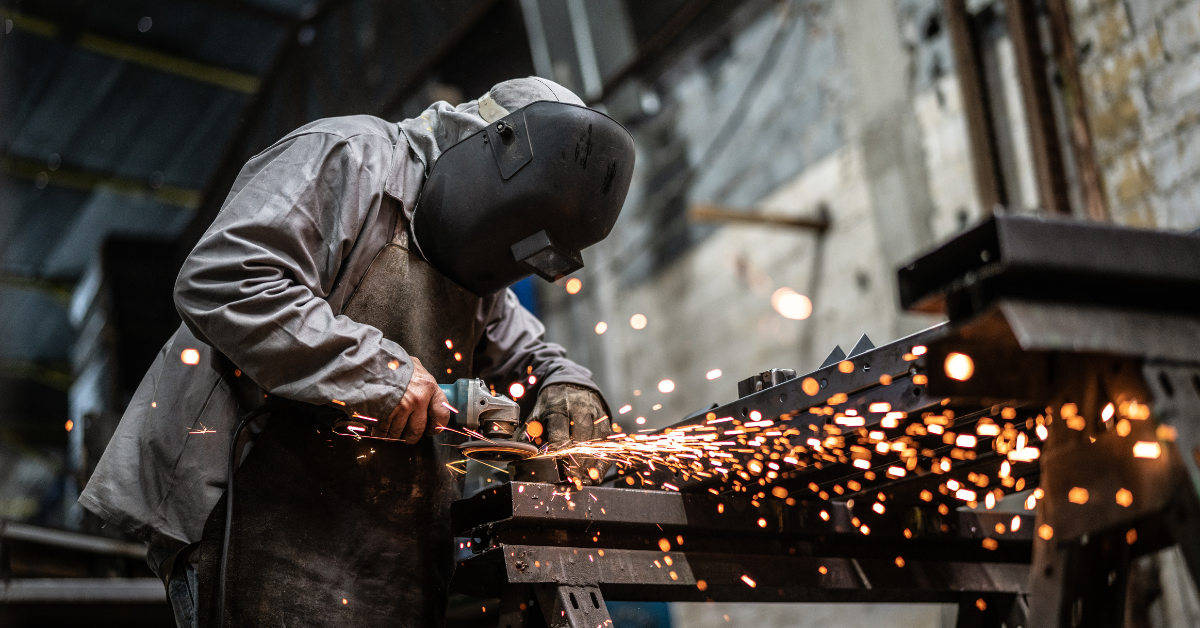
    India’s leading steel companies are hopeful that the upcoming Modi 3.0 Budget will prioritize continued massive capital expenditure, particularly in infrastructure development and manufacturing, while ensuring fair competition against imports.

    The infrastructure sector, the largest consumer of steel, has seen robust growth thanks to government initiatives, even amid global market challenges. Steel consumption surged by 13.6% in FY24, reaching 136 million tonnes, with strong finished steel production up by 12.7% year-on-year to 139 million tonnes, according to CRISIL.

    T V Narendran, MD and CEO of Tata Steel, expects sustained infrastructure investments and improvements in the business environment. Jayant Acharya, Joint MD and CEO of JSW Steel, emphasizes the multiplier effect of infrastructure spending on the economy and urges continued government support in this area.

    In addition to infrastructure, the steel sector is calling for enhanced focus on manufacturing. Ranjan Dhar, Director and VP of Sales and Marketing at ArcelorMittal Nippon Steel India (AM/NS India), stresses the need for significant manufacturing enhancements. Acharya of JSW Steel advocates for extending tax concessions and smoother incentives under the production-linked incentive scheme to bolster domestic manufacturing.

    Despite ambitious expansion plans aligned with the government’s target to achieve 300 million tonnes of steel capacity by FY31, imports have affected prices. Dhar highlights the importance of protecting the industry from adverse impacts, suggesting an increase in basic customs duty from 7.5% to 12.5% on steel imports.

    To address trade challenges, Alok Sahay, Secretary General of the Indian Steel Association, urges stricter rules of origin for steel imports and rectification of double taxation on iron ore to ensure a level playing field.

    Looking ahead, the industry seeks policies to incentivize investments in decarbonization and promote low-carbon emission steel, particularly through government projects, to stimulate demand in this sector.

  • India’s Electronic Manufacturing May Reach USD 500 Billion by 2030: CII Report

    India’s Electronic Manufacturing May Reach USD 500 Billion by 2030: CII Report

    display manufacturing

    India’s Electronic Manufacturing May Reach USD 500 Billion by 2030: CII Report

    A report by the Confederation of Indian Industry (CII) emphasizes the need for critical actions to transform India’s electronic sector ecosystem from “import-dependent assembly-led manufacturing” to “component-level value-added manufacturing.”

     Key Findings

    According to the report, in 2023, the demand for components and sub-assemblies reached USD 45.5 billion, supporting USD 102 billion worth of electronics production. This demand is projected to surge to USD 240 billion, supporting USD 500 billion worth of electronics production by 2030.

    Growth Projections

    Priority components and sub-assemblies, including Printed Circuit Board Assemblies (PCBAs), are expected to grow at a robust Compounded Annual Growth Rate (CAGR) of 30%, reaching USD 139 billion by 2030.

     Recommendations for Government Action

    The report recommends several key actions for the government, including:
    – Introducing a fiscal support scheme, SPECS 2.0 (Scheme for Promotion of Manufacturing of Electronic Components and Semiconductors).
    – Rationalizing import tariffs on components like camera modules.
    – Signing Free Trade Agreements (FTAs) with European and African countries.

     Priority Components

    The report identifies five priority components and sub-assemblies as high priority for India: lithium-ion batteries, camera modules, mechanicals, displays, and PCBs. These components accounted for 43% of the components demand in 2022 and are expected to grow to USD 51.6 billion by 2030.

     Current Challenges

    These components are either minimally produced in India or are heavily import-dependent. Sustaining this trend of importing priority components is not viable. The PCBA segment, which relies heavily on imports, is expected to grow by 30%, creating a demand of around USD 87.46 billion by 2030.

    However, India faces several challenges, including:
    – Manufacturing cost disadvantages compared to economies like China, Vietnam, and Mexico (10-20%).
    – Lack of large domestic manufacturing corporations.
    – Absence of a domestic design ecosystem for Indian companies.
    – Insufficient raw materials ecosystem.

     Economic Benefits

    The report suggests that policy support will yield various economic benefits, such as:
    – Job creation for approximately 280,000 people by 2026.
    – Increase in domestic value addition from current levels.
    – Reduction in import dependency.
    – Increase in GDP.

    These measures will help firmly position India as a global hub for electronics manufacturing by 2030.

  • India’s Electronic Manufacturing Set to Double to $250 Billion in Five Years: Report

    India’s Electronic Manufacturing Set to Double to $250 Billion in Five Years: Report

    display manufacturing

    India’s Electronic Manufacturing Set to Double to $250 Billion in Five Years

    India’s electronic manufacturing sector is poised for significant growth, with projections indicating it will double to around $250 billion in the next five years, according to a report from The Economic Times. This growth would elevate the sector from its current value of $125-130 billion in electronic exports.

    To combat unemployment, the government is targeting job creation in the electronic manufacturing sector, aiming to double the current workforce of 2.5 million to around 5 million in the same timeframe.

    “Our focus remains on providing services to digital technology and expanding large-scale electronics manufacturing. These targets will only accelerate,” stated Ashwini Vaishnaw, Minister for Electronics and Information Technology.

    The report highlights India’s shift from import substitution to becoming self-reliant (Aatmanirbhar) and an export-led manufacturer, especially in segments like mobile phones. The country is also working towards self-reliance in laptop manufacturing.

    The Indian government has earmarked Rs 760 billion for electronic manufacturing through various incentive schemes. Despite this, India’s per capita electronic consumption remains at one-fourth of the global average.

    Currently, a significant portion of India’s electronic imports come from China (44%) and Hong Kong (16%). On the export front, mobile phones and Electronic Control Units (ECUs) dominate, with the United States and the UAE being the largest export destinations.

    Experts note that India’s electronic manufacturing sector is undergoing a transformation, strengthening the country’s position as a global electronics manufacturing hub.

    To further this goal, the government has launched several initiatives, including the Production Linked Incentive (PLI) Scheme for large-scale electronics manufacturing, PLI for IT hardware, the Scheme for Promotion of Manufacturing of Electronic Components and Semiconductors (SPECS), and the Modified Electronics Manufacturing Clusters Scheme (EMC 2.0).

    Additionally, the government has introduced the Semicon India Program with a $10 billion incentive outlay, aiming to develop a sustainable semiconductor and display ecosystem, further establishing India as a global hub for semiconductor and display manufacturing.

  • How India is Poised Amid Global Demand Revival

    How India is Poised Amid Global Demand Revival

    Indian manufacturing sector

    How India is Poised Amid Global Demand Revival

    As global demand shows signs of revival, India must seize the opportunity to capitalize on this trend.

    In 2023, global demand was relatively subdued due to lower consumer consumption and rising inflation in key markets such as Europe and the US. This resulted in a decline in India’s merchandise exports. However, experts now anticipate a gradual recovery in global demand, evidenced by a 11.86% year-on-year growth in exports (to $41.4 billion) in February 2024.

    Despite the slowdown, industrial products like engineering goods, petroleum products, pharmaceuticals, and electronic goods maintained or increased their export levels. In contrast, consumer-facing segments such as garments, gems and jewelry, and handloom products saw a decline, according to Anubhav Kathuria, Director of Synergy Steels.

    “In macro terms, we see inflation cooling down to preferable levels in Europe, which could enhance prospects for consumer-focused merchandise producers in India. The stainless steel industry, impacted by global macroeconomic developments, is looking at the year ahead with cautious optimism,” said Kathuria.

    Aruna Sharma, Former Secretary, Ministry of Steel, believes a demand revival would also benefit small businesses and generate employment. “India contributes around 16% of global growth and has maintained a consistent growth rate of 6-8% in recent quarters. Despite challenges and reduced savings, the demand for FMCG goods is reviving. A global economic revival will positively impact MSMEs, driving employment and economic growth,” Sharma stated.

    Strategies to Capitalize on the Gradual Demand Revival

    Gopalakrishnan Narasimhan, Partner & Director-Africa at Kaizen Institute, noted that the gradual revival in global demand is expected to benefit key industries. Exports of electronic goods have seen remarkable growth, increasing over 25% from $21.07 billion in April 2023 to $26.51 billion in April 2024.

    India’s major exports include pearls, precious and semi-precious stones and jewelry (16%); mineral fuels, oils, and waxes (12%); nuclear reactors, boilers, machinery, and mechanical appliances (5%); pharmaceutical products (5%); and organic chemicals (4%).

    “Product linked incentives (PLI), which are expected to bring in incremental investment of Rs 7,920 crore and increase exports worth Rs 64,400 crore, alongside flexible FDI policies, have significantly diversified India’s export basket towards more value-added products like electronic goods and chemicals,” Narasimhan added.

    Strengthening Supply Chains

    Kathuria highlighted that India has learned from the pandemic to create a robust domestic base for raw materials and components in key manufacturing industries. This strategy includes infra-investments, financial incentives, and policy direction. The Critical Minerals Mission, for example, promotes the exploration of 30 critical minerals crucial for manufacturing stainless steel, electronics, and electrification products, which currently rely heavily on imports.

    Narasimhan emphasized the volatility in the geopolitical realm and the potential disruptions to supply chains due to geopolitical tensions and economic sanctions. He projected the manufacturing industry’s share of GDP in India to increase from 15.6% to 21% by 2031, doubling India’s export market share. The government aims to boost merchandise exports to $1 trillion by 2027-28.

    “With increased budgetary allocations for the manufacturing industry and the integration of emerging technologies like AI, along with dedicated schemes like Gati Shakti and the National Infrastructure Pipeline, India is on track to enhance its manufacturing and distribution networks and emerge as a global manufacturing hub,” Narasimhan noted.

    Impact of Demand Revival on India’s Trade Destinations

    Sharma pointed out that building trade centers takes years, and maintaining consistent supply and presence is crucial. “India lost the market in iron ore exports from Goa after a court stay on mining in 2018. Such setbacks need to be avoided. India has great potential in sectors like agriculture, textiles, pharmaceuticals, steel, and MSME products. The revival of the global economy is an opportunity for these sectors to thrive. Ensuring access to cheap working capital and complying with emission norms will enhance their export capabilities,” Sharma explained.

    Since the 1991 reforms, India’s trade relations have significantly transformed, with increased exports to key markets like the US, Europe, and Asia. Narasimhan highlighted the exploration of newer markets such as Montenegro, Turkmenistan, Mongolia, and Honduras.

    “The key reasons for the stellar export performance are the sharp recovery in key markets, increased consumer spending, accumulated savings, disposable income due to fiscal stimulus by major economies, global commodity price rises, and an aggressive export push by the government,” Narasimhan said.

    India’s progress as a global export hub, coupled with increasing free trade agreements (FTAs) with major nations and entities, is expected to strengthen trade relationships in line with changing consumer trends and market dynamics.

  • Industry Anticipates Stronger Emphasis on Electronics Manufacturing from New Government

    Industry Anticipates Stronger Emphasis on Electronics Manufacturing from New Government

    display manufacturing

    Industry Anticipates Stronger Emphasis on Electronics Manufacturing from New Government

    The industry is optimistic that the new government will support the localization of component production and help homegrown brands excel on the global stage.

    In his inaugural address following the General Elections, where the BJP fell short of a majority but secured the halfway mark with its allies, Narendra Modi expressed confidence in securing a third consecutive term. Remaining true to his pre-election promises, Modi reiterated his commitment to advancing the agenda established during the past decade. The NDA government has introduced several production-linked incentive (PLI) schemes for mobile phones, IT hardware, and other sectors to realize its vision of a self-reliant India. In his third term, Modi aims to strengthen production in the electronics and semiconductor industries. During his address, Modi stated, “We made India the second-largest smartphone manufacturer. Now, we will increase work in semiconductors and electronics production sectors.”

    The industry is encouraged by this sentiment.

    Amit Khatri, Co-Founder of the homegrown wearable company Noise, commented, “We trust that the new administration will significantly advance India’s electronic manufacturing sector. Guided by the vision of Aatmanirbhar Bharat, we also hope for government support in localizing component production and creating an environment where homegrown brands can lead India on the global stage. We are optimistic about the future and are ready to collaborate with the new government to make India a global leader in the smart wearable industry, driving economic growth, creating jobs, and delivering innovative products that enhance the lives of millions.”

    While India has made strides in smartphone manufacturing and with laptops and PCs also being produced locally, the wearable and TV industries are also expecting a significant push from the new government. In recent years, many Indian companies have already begun manufacturing and assembling their products locally in response to the Make in India initiative.

    Varun Gupta, Co-Founder of Boult, noted, “The robust growth of India’s manufacturing sector, serving as the primary driver amidst a global slowdown, underscores the nation’s resilience with over 8.2% GDP growth. Particularly, the electronics sector is poised to transcend mere import substitution and evolve into a formidable export hub. The PLI scheme tailored for hearables and wearables is poised to play a pivotal role in realizing the government’s ambitious export targets, providing a substantial boost to the sector’s competitiveness and contribution to the global market.”

    Continued adherence to policies and a dedicated focus on infrastructure initiatives is seen as crucial for the industry.

    Avneet Singh Marwah, CEO of SPPL, a contract manufacturer for TVs, washing machines, and ACs in India, stated, “Our industry thrives on stability and conducive policies. We look forward to a government committed to fostering innovation, streamlining regulations, and investing in infrastructure. Expedited project completions and a reduction in GST on televisions and air conditioners from 28% to 18% will further propel our sector’s growth, enabling us to contribute significantly to India’s economic progress. Together, with the right governmental support, we aim to drive not just our company’s success but also contribute significantly to India’s journey towards becoming a global electronics hub.”

  • Pharma and Electronics Manufacturing to Receive Boost in Modi 3.0

    Pharma and Electronics Manufacturing to Receive Boost in Modi 3.0

    Pharma and electronics

    Pharma and Electronics Manufacturing to Receive Boost in Modi 3.0 Era

    With the BJP anticipated to secure a significant portion of seats in UP, Gujarat, Maharashtra, Telangana, and Himachal Pradesh, industry leaders foresee a continued emphasis on local manufacturing. These states serve as major manufacturing hubs for Active Pharmaceutical Ingredients (APIs) and electronic goods.

    As the exit poll results indicate a clear victory for Prime Minister Narendra Modi-led BJP government at the center, stakeholders from sectors like pharmaceuticals, medical devices, and electronics manufacturing anticipate a substantial push for local production.

    According to the India Today-Axis My India exit poll, the BJP is expected to sweep all seats in Gujarat and Himachal Pradesh, as well as over 60 percent and 70 percent of Lok Sabha seats in Maharashtra and Telangana, respectively. These states play a pivotal role as manufacturing hubs for pharmaceuticals and medical devices. Additionally, the BJP is predicted to secure over 85 percent of seats in Uttar Pradesh and Andhra Pradesh, two states along with Telangana that are crucial for electronics manufacturing in the country.

    Boost for Pharma:

    A robust performance is anticipated by the BJP-led National Democratic Alliance (NDA) in key states, driven by a manifesto emphasizing the manufacturing of Active Pharmaceutical Ingredients (APIs) and advancing research. Raj Prakash Vyas, President-Corporate Affairs at Cadila Pharmaceuticals, highlighted potential benefits such as the expansion of PLI schemes to encourage domestic manufacturing and stringent quality control measures to combat spurious drugs.

    Vyas proposed the establishment of an Innovation Task Force (ITF) dedicated to pharmaceuticals, comprising experts from various fields, to accelerate the development and adoption of innovative solutions. Yogesh Mudras, Managing Director at Informa Markets, noted India’s leadership in the pharmaceutical industry and stressed the need for further investments in research and rural healthcare.

    Tuhin A Sinha, National Spokesperson for BJP, remarked that the exit polls support the PM’s vision of Viksit Bharat (developed India) and are positive for the pharmaceutical and healthcare sectors, where India has emerged as a global leader.

    India as an Electronics Hub:

    With the BJP government at the center and gaining influence in major manufacturing hubs like UP, AP, and Telangana, the industry expects further impetus to transform India into a major hub for electronic exports. The government’s PLI scheme has attracted leading players to set up new plants, increasing capacity in areas like mobile handsets, LEDs, and components for air conditioners.

    Avneet Singh Marwah, CEO of Superplastronics, emphasized the importance of policy continuity and infrastructure development to support the industry. He also called for a reduction in GST rates on household items like TVs and ACs to stimulate demand.

    Rajiv Nath, forum coordinator of the Association of Indian Medical Device Industry (AiMeD), anticipates government support to enhance medical device manufacturing, advocating for a predictable tariff regime and fair pricing practices.

  • Display Manufacturing Needs Special Focus, Says ICEA

    Display Manufacturing Needs Special Focus, Says ICEA

    display manufacturing

    Display Manufacturing Needs Special Focus, Says ICEA

    The government is providing 50% fiscal support under the Rs 76,000-crore semiconductor incentive scheme for display fabrication.

    The India Cellular and Electronics Association (ICEA) emphasized on Tuesday the need for special attention to display manufacturing in India, which is currently the third-largest consumer of display products globally.

    Despite the government offering 50% fiscal support under the Rs 76,000-crore semiconductor incentive scheme for setting up display fabrication units, none of the three applications received for display fabs have been approved so far.

    “We have not made significant progress beyond display assembly. Displays constitute a major 15% to 20% of the Bill of Material, comparable to logic, memory, and semiconductors. This is a significant concern,” said Pankaj Mohindroo, chairman of ICEA.

    The association, which includes companies like Apple, Foxconn, Lava, and other Chinese handset and electronics companies, stresses the importance of focusing on this sector to establish India as a robust display manufacturing hub.

    Mohindroo added, “This sector needs special attention, and we are determined to make India a strong display manufacturing nation.”

    Experts believe that display manufacturing in India offers a unique opportunity to attract international companies looking to diversify their supply chains. This would not only meet domestic demand but also enhance exports from India.

    According to ICEA, the demand for displays in India is primarily driven by mobile phones, among other devices such as televisions, notebooks, tablets, and desktops.

    The total demand for displays in the country increased to 338.4 million units in 2023, up from 303.7 million units in 2022, with mobile phones accounting for 310 million display units in 2023. The overall display demand in India is expected to reach 383.5 million units by 2026.

  • Indian PE-VC Investment Declines in 2023; Manufacturing Sector Shows 20% CAGR Growth Over Two Years

    Indian PE-VC Investment Declines in 2023; Manufacturing Sector Shows 20% CAGR Growth Over Two Years

    Indian PE-VC Investment

    Indian PE-VC Investment Declines in 2023; Manufacturing Sector Shows 20% CAGR Growth Over Two Years, Says Report

    The manufacturing sector in India has emerged as a strong investment opportunity, with around $2 billion in investments growing at a 20 percent CAGR over the last two years (2021–23).

    Indian private equity and venture capital (PE-VC) investments softened to approximately $39 billion in 2023, reflecting a global trend, according to a report by Bain & Company. Traditional sectors such as manufacturing, healthcare, and energy demonstrated resilience, accounting for about 75 percent of investments in 2023, up from 60 percent in 2022.

    The growth in the manufacturing sector, driven by supply chain diversification, government incentives, and the availability of scale assets, was highlighted in Bain & Company’s annual ‘India Private Equity Report 2024’, created in collaboration with the Indian Venture and Alternate Capital Association (IVCA).

    With electric vehicle (EV) penetration in India expected to reach 40 percent by 2030, original equipment manufacturers (OEMs) dominated more than 70 percent of deal value in the past year. Significant investments (over $100 million) were made in companies such as Ola Electric, Ather Energy, Mahindra EV, and TI Clean Mobility. Additionally, packaging saw substantial deals in globally competitive companies with strong export performance, including Polyplex and Tufropes, both generating over 70 percent of sales from exports.

    Gustaf Ericson, Associate Partner at Bain & Company, stated, “Advanced manufacturing is expected to see increased deal activity in the near to mid-term, driven by China+1 tailwinds, government incentives like PLI, and the emergence of scaled assets across multiple segments. We expect electronic manufacturing services, packaging, and EV players to benefit significantly from this favorable environment in the coming years.”

    Despite a temperate outlook for India PE-VC dealmaking in 2024 due to global macroeconomic stabilization, traditional sectors such as advanced manufacturing are poised to attract substantial investments. This is attributed to positive fundamentals, supportive policies (like production-linked incentives and tax incentives), and the growth of scale assets across various sub-segments.

    The EV market is anticipated to experience robust deal activity, especially in OEMs with scale assets planning capacity expansions or new product launches, as well as in charging infrastructure and battery-swapping players looking to expand geographically or into new EV segments.

    Key investment drivers are expected in plastics, secondary paper, and glass, propelled by the F&B industry’s demand for premium, lightweight, cost-effective plastics, and the e-commerce sector’s shift towards sustainable packaging. Revenues for India-based packaging companies are projected to grow at around 10 percent CAGR between 2023-27.

    Electronics production in India is forecasted to grow at a 25 percent CAGR over 2023-27, with mobile phones, IT hardware, and consumer electronics being the most attractive sub-segments for deal activity. This growth is driven by increased smartphone and consumer durable penetration, faster replacement cycles, significant export uptake by leading players, increased backward integration (e.g., into components), and a favorable duty structure for import substitution.

    Additionally, global supply chain diversification is likely to benefit Indian manufacturers in export-oriented sectors like electronics, pharmaceuticals (especially APIs and CDMOs), and chemicals (specialty chemicals and agrochemicals), given their globally competitive scale and robust government support.

    The Bain & Company report also noted that India-focused funds are increasingly diversifying across various sectors. Leading funds entered new sectors from 2021–23, with manufacturing, healthcare, new-age tech, and SaaS attracting the most new investments.

    In 2023, India saw $29.6 billion in PE investments during a subdued year for private equity globally, marking an 18 percent drop from 2022’s peak value of $36 billion. PE accounted for around 75 percent of total PE-VC deal value, driven by large-scale deals for high-quality assets. VC investments dropped significantly to $9.6 billion in 2023 from $25.7 billion in 2022, as investors prioritized unit economics over growth and recalibrated strategies amid macroeconomic challenges.
  • India Logs Robust Business Activity Growth in May

    India Logs Robust Business Activity Growth in May

    HSBC Flash India Services All News Images Videos Shopping More Tools Private sector Hsbc bank Flash pmi Hsbc holdings Manufacturing pmi Business growth Business activity Hsbc survey Pmi data Flash PMI Estimates ... a day ago ABP Live - ABP News Flash PMI Estimates ... HSBC Flash India PMI indicates robust ... India Frontline HSBC Flash India PMI indicates robust ... amid cooling manufacturing, HSBC Survey ... 23 hours ago Mint amid cooling manufacturing, HSBC Survey ... HSBC Flash India PMI HSBC Global Research - HSBC Group HSBC Flash India PMI strong, HSBC Flash PMIs show ... Business Today strong, HSBC Flash PMIs show ... HSBC Flash India PMI indicates robust ... Business Today HSBC Flash India PMI indicates robust ... Business activity grew at fastest pace ... Mint Business activity grew at fastest pace ... HSBC Flash India PMI PMI, Purchasing Managers' Index - S&P Global HSBC Flash India PMI HSBC Flash PMIs ... 5 days ago Bloomberg HSBC Flash PMIs ... HSBC Flash India PMI HSBC India HSBC Flash India PMI HSBC Flash PMIs Show NDTV Profit HSBC Flash PMIs Show India's Services PMI Slips In April ... ABP Live - ABP News India's Services PMI Slips In April ... May PMI shows India's strong growth in ... 15 hours ago IndiaToday May PMI shows India's strong growth in ...

    India Logs Robust Business Activity Growth in May

    Driven by a sharp acceleration in the services sector, India’s business activity expanded at its third strongest rate in nearly 14 years. The HSBC Flash India Composite Output Index, or Flash PMI, rose to 61.7 in May from 61.5 in April, according to data released by S&P Global on Thursday.

    Services firms recorded a significant increase in business activity, the steepest in four months, while factory production rose at its slowest pace since February, stated S&P Global. Despite this, manufacturing continued to grow at a stronger rate than services.

    In May, the HSBC Flash India Services PMI Business Activity Index increased to 61.4 from 60.8 in April, whereas the HSBC Flash India Manufacturing PMI Output Index decreased to 62.4 from 63.0.

    The latest data highlights robust growth in new export orders across both the manufacturing and services sectors. At the composite level, international sales expanded at the fastest rate since the series began in September 2014, said S&P Global. “Respondents noted gains from many parts of the world, including Africa, Asia, Australia, the Americas, Europe, and West Asia.”

    Pranjul Bhandari, chief India economist at HSBC, noted that although manufacturing sector growth slowed slightly in May due to a decrease in new orders and production, “the rise in output in the manufacturing industry continued to surpass that in the services economy.”

    Meanwhile, reports of higher labor and material costs led to input prices across the private sector rising at the fastest pace in nine months. Increases were noted in prices for chemicals, food, plastics, electronic components, and electrical items.

    Aggregate selling prices also rose more significantly in May. The manufacturing industry saw a faster increase in charges, contrasting with the trend seen for input prices, noted S&P Global.

    Looking ahead, Bhandari mentioned that optimism for the year ahead reached its highest level in over 11 years, prompting firms to increase staffing levels. “However, higher input costs in both sectors led to further margin squeezes, particularly for service providers,” she said.

    The Flash India composite PMI is a seasonally adjusted index measuring the month-on-month change in combined output from India’s manufacturing and services sectors. Flash data, derived from 80-90% of total survey responses, aim to provide an early indication of the final data, released during the first week of the month.

    The index is compiled from surveys sent to panels of around 400 manufacturers and 400 service firms. Survey responses, collected in the second half of each month, indicate the direction of change compared to the previous month. A reading above 50 indicates expansion, while a reading below 50 indicates contraction.

  • Electronics Manufacturers Urge Indian Government to Introduce PLI Scheme for Components and Wearables

    Electronics Manufacturers Urge Indian Government to Introduce PLI Scheme for Components and Wearables

    PLI Scheme

    Electronics Manufacturers Urge Indian Government to Introduce PLI Scheme for Components and Wearables

    A trade association representing major electronic manufacturers such as Asus, Dell, Google, Canon, and Dixon has appealed to the Indian government to introduce a production-linked incentive (PLI) scheme for electronic components and wearables. In a letter to S. Krishnan, the Secretary of the Ministry of Electronics and Information Technology, the Manufacturers Association for Information Technology (MAIT) emphasized that such incentives would not only boost exports but also enhance large-scale production capacity and attract investment in the electronics sector.

    MAIT’s members, which include notable companies like Harman, Konica Minolta, and 3M, argued that a PLI scheme for hearables and wearables would help meet the government’s ambitious export targets. Dixon, one of the association’s members, manufactures laptops in India for Lenovo.

    This appeal aligns with the Ministry of Electronics and Information Technology’s plans to introduce similar PLI schemes for the broader electronics ecosystem. Senior officials have indicated that the government will initiate a consultation process for a potential electronics components PLI after the current Lok Sabha elections conclude.

    “For the component PLI, we should consider a unified PLI for electronics rather than sector-specific schemes to build a robust electronics industry. Focusing solely on one sector in the past has limited the effectiveness of the component PLI for mobiles,” MAIT’s submission stated, as seen by Moneycontrol.

    The industry body also recommended that India’s forthcoming cybersecurity strategy align with international partners’ legislative or regulatory frameworks to create secure global supply chains and enhance collective security.

    “The rise of global value chains and India’s PLI and Make in India initiatives have significantly boosted the country’s global trade, particularly in electronics and ICT sectors. At MAIT, we believe that for India to fully integrate into global supply chains, regulatory adjustments encouraging global investment and local company participation are crucial,” said Rajkumar Rishi, President of MAIT.

    “As more companies consider investing in Indian manufacturing, we foresee accelerated growth in output, exports, and the overall economy. Developing a robust cybersecurity strategy is a top industry priority,” Rishi added.

    Additionally, MAIT presented specific recommendations to various ministries and departments, including the Prime Minister’s Office, Ministry of Commerce and Industry, Ministry of Finance, and the Department of Telecom. The suggestions included:

    – Supporting Ease of Doing Business initiatives.
    – Considering tariff reforms to promote competitiveness and large-scale manufacturing.
    – Opening investment limit enhancement under PLI for telecom.
    – Excluding the telecom and electronics sectors from section 65A applicability to optimize the Manufacturing and Other Operations in Warehouse (MOOWR) scheme for these industries.

    These recommendations aim to foster a conducive environment for electronics manufacturing in India, thereby strengthening the sector’s global position and economic impact.

Login