

Tag: growth

  • IIMA Ventures Launches Growth Accelerator 2.0 to Support 15 SMEs

    IIMA Ventures Launches Growth Accelerator 2.0 to Support 15 SMEs

    SME

    IIMA Ventures Launches Growth Accelerator 2.0 to Support 15 SMEs

    Participants will start with a three-day bootcamp at the IIM Ahmedabad campus, featuring workshops and sessions on scaling businesses, led by IIMA faculty.

    IIMA Ventures, the startup incubator of IIM Ahmedabad, has launched Growth Accelerator 2.0, designed to support 15 SMEs, family businesses, and growth-stage startups in driving strategic growth and innovation. The program will offer knowledge sessions, masterclasses, workshops, founder talks, diagnostic panels, and mentoring clinics to help participants seize growth opportunities.

    Founded in 2002, IIMA Ventures focuses on studying, educating, incubating, accelerating, and investing in early-stage startups, aspiring entrepreneurs, and investors. Partner-Incubation, Chintan Bakshi, explained that the accelerator addresses significant gaps in the Indian SME ecosystem. “SMEs, despite being crucial to the economy, often struggle to leverage innovation for rapid growth. Tools like emerging technologies, business optimization, and lean startup frameworks can unlock growth potential for them,” he said.

    For established businesses, rapid growth often demands not only resources but also the ability to execute strategies effectively. Growth Accelerator 2.0 provides a structured environment for leaders to experiment with and implement new strategies, whether through streamlining operations, adopting scalable technologies, or building competitive advantages.

    Participants will begin their journey with a three-day intensive bootcamp at the IIM Ahmedabad campus, where faculty-led workshops will focus on scaling businesses. Successful entrepreneurs will also share real-world insights on business growth. Over the following two months, participants will receive personalized mentorship from domain experts to help them overcome their specific challenges.

    Regarding selection, Bakshi added that the process is ongoing. The selection focuses on businesses that have validated their models, achieved steady sales, and whose leaders are committed to experimenting with change. “We assess entrepreneurs willing to work with us to accurately identify and invest in growth areas,” he said.

    The Growth Accelerator is open to leaders across all sectors, including second and third-generation entrepreneurs aiming to scale operations. The program kicks off in mid-October and runs annually.

    The first batch of the accelerator supported 10 businesses from various sectors, including engineering, auto parts, FMCG, furniture manufacturing, agricultural equipment, and skills training. Participants came from cities like Vadodara, Ahmedabad, Indore, and Jamshedpur, with many from smaller, non-metro areas. In 2023, they developed growth strategies aimed at scaling their businesses by 5 to 10 times.
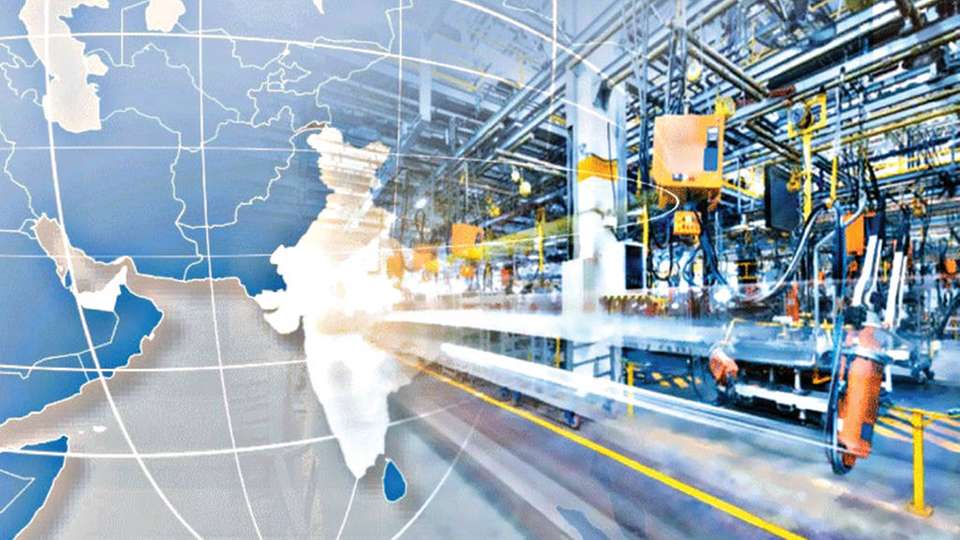

  • India’s Manufacturing Sector Growth Slows in July Amid Softer Orders and Output

    India’s Manufacturing Sector Growth Slows in July Amid Softer Orders and Output

    manufacturing sector

    India’s Manufacturing Sector Growth Slows in July Amid Softer Orders and Output

    New Delhi: India’s manufacturing activity eased slightly in July due to softer increases in new orders and output, following a recovery in June from a three-month low in May.

    The HSBC final India Manufacturing Purchasing Managers Index (PMI), compiled by S&P Global, recorded 58.1 in July, compared to 58.3 in June, 57.5 in May, and 58.8 in April. This index is based on responses from around 400 manufacturers.

    Although the July reading was marginally lower than the flash projection of 58.5 released last month, it remained above both its long-term average and the 50-point threshold separating contraction from expansion, marking nearly three years of continuous growth.

    “India’s manufacturing sector continued to post impressive growth in July, despite slightly softer increases in new orders and output. Key positive developments included one of the fastest expansions in international sales in over 13 years and another robust round of job creation,” the report stated.

    However, strong demand also led to price pressures, with input costs rising at one of the quickest rates in nearly two years, resulting in the steepest increase in selling prices since October 2013.

    Buoyant Demand

    The report highlighted that buoyant demand had a positive ripple effect across the manufacturing industry, particularly through a substantial increase in new work intakes. Despite a slowdown since June, the pace of sales growth remained sharp, with production volumes significantly raised at the start of the second fiscal quarter.

    “India’s headline manufacturing PMI showed a marginal slowdown in the pace of expansion in July, but with most components remaining at robust levels, the small drop is no cause for concern,” said Pranjul Bhandari, chief India economist at HSBC. “New export orders remain a bright spot… The continuous increase in the output price index, driven by input and labor cost pressures, may signal further inflationary pressure in the economy.”

    Normal Monsoon Predicted

    The Reserve Bank of India (RBI) has raised its FY25 GDP growth forecast from 7% to 7.2%, supported by improved rural and urban demand and predictions of a normal monsoon. These monsoon predictions are positive for agricultural output growth, with robust government capital expenditure, strong investment demand, and upbeat consumer and business sentiment contributing to the resilience of the Indian economy. However, geopolitical tensions and divergent monetary policies of major central banks have increased uncertainty.

    In its June meeting, the RBI’s Monetary Policy Committee kept the benchmark rate at 6.25%. Retail inflation, which spiked to a four-month high of 5.08% in June, poses a challenge for policymakers aiming to reduce interest rates. The rise in June was mainly due to higher food inflation, which accounts for nearly 40% of the consumer price basket.

    The PMI report noted that Indian goods producers raised selling prices to protect margins from cost increases. Firms cited higher fees for raw materials, increased labor costs, and strong demand as reasons for the upward adjustments to output charges.

    “Amid reports of strengthening demand from clients based in Asia, Europe, North America, and the Middle East, Indian manufacturers experienced a robust increase in international sales during July,” the report added.

  • Indian PE-VC Investment Declines in 2023; Manufacturing Sector Shows 20% CAGR Growth Over Two Years

    Indian PE-VC Investment Declines in 2023; Manufacturing Sector Shows 20% CAGR Growth Over Two Years

    Indian PE-VC Investment

    Indian PE-VC Investment Declines in 2023; Manufacturing Sector Shows 20% CAGR Growth Over Two Years, Says Report

    The manufacturing sector in India has emerged as a strong investment opportunity, with around $2 billion in investments growing at a 20 percent CAGR over the last two years (2021–23).

    Indian private equity and venture capital (PE-VC) investments softened to approximately $39 billion in 2023, reflecting a global trend, according to a report by Bain & Company. Traditional sectors such as manufacturing, healthcare, and energy demonstrated resilience, accounting for about 75 percent of investments in 2023, up from 60 percent in 2022.

    The growth in the manufacturing sector, driven by supply chain diversification, government incentives, and the availability of scale assets, was highlighted in Bain & Company’s annual ‘India Private Equity Report 2024’, created in collaboration with the Indian Venture and Alternate Capital Association (IVCA).

    With electric vehicle (EV) penetration in India expected to reach 40 percent by 2030, original equipment manufacturers (OEMs) dominated more than 70 percent of deal value in the past year. Significant investments (over $100 million) were made in companies such as Ola Electric, Ather Energy, Mahindra EV, and TI Clean Mobility. Additionally, packaging saw substantial deals in globally competitive companies with strong export performance, including Polyplex and Tufropes, both generating over 70 percent of sales from exports.

    Gustaf Ericson, Associate Partner at Bain & Company, stated, “Advanced manufacturing is expected to see increased deal activity in the near to mid-term, driven by China+1 tailwinds, government incentives like PLI, and the emergence of scaled assets across multiple segments. We expect electronic manufacturing services, packaging, and EV players to benefit significantly from this favorable environment in the coming years.”

    Despite a temperate outlook for India PE-VC dealmaking in 2024 due to global macroeconomic stabilization, traditional sectors such as advanced manufacturing are poised to attract substantial investments. This is attributed to positive fundamentals, supportive policies (like production-linked incentives and tax incentives), and the growth of scale assets across various sub-segments.

    The EV market is anticipated to experience robust deal activity, especially in OEMs with scale assets planning capacity expansions or new product launches, as well as in charging infrastructure and battery-swapping players looking to expand geographically or into new EV segments.

    Key investment drivers are expected in plastics, secondary paper, and glass, propelled by the F&B industry’s demand for premium, lightweight, cost-effective plastics, and the e-commerce sector’s shift towards sustainable packaging. Revenues for India-based packaging companies are projected to grow at around 10 percent CAGR between 2023-27.

    Electronics production in India is forecasted to grow at a 25 percent CAGR over 2023-27, with mobile phones, IT hardware, and consumer electronics being the most attractive sub-segments for deal activity. This growth is driven by increased smartphone and consumer durable penetration, faster replacement cycles, significant export uptake by leading players, increased backward integration (e.g., into components), and a favorable duty structure for import substitution.

    Additionally, global supply chain diversification is likely to benefit Indian manufacturers in export-oriented sectors like electronics, pharmaceuticals (especially APIs and CDMOs), and chemicals (specialty chemicals and agrochemicals), given their globally competitive scale and robust government support.

    The Bain & Company report also noted that India-focused funds are increasingly diversifying across various sectors. Leading funds entered new sectors from 2021–23, with manufacturing, healthcare, new-age tech, and SaaS attracting the most new investments.

    In 2023, India saw $29.6 billion in PE investments during a subdued year for private equity globally, marking an 18 percent drop from 2022’s peak value of $36 billion. PE accounted for around 75 percent of total PE-VC deal value, driven by large-scale deals for high-quality assets. VC investments dropped significantly to $9.6 billion in 2023 from $25.7 billion in 2022, as investors prioritized unit economics over growth and recalibrated strategies amid macroeconomic challenges.

Login