
Tag: Business

  • Bridging India’s Digital Frontier

    Bridging India’s Digital Frontier

    5G and Fixed Wireless Access

    Bridging India’s Digital Frontier: A Exploration of 5G and Fixed Wireless Access with Nitin Bansal, Head of Ericsson India

    In an era where connectivity is paramount, India stands on the cusp of a digital revolution driven by the convergence of 5G and Fixed Wireless Access (FWA). As the nation marches towards a more connected future, the integration of these transformative technologies promises to unlock unparalleled innovation, inclusivity, and economic prosperity. In this exclusive news article, we take a deep dive into the dynamics of India’s digital landscape, with insights from Nitin Bansal, Head of Ericsson India and Head of Network Solutions for Southeast Asia, Oceania & India.

    Chapter 1: The 5G Revolution in India

    India’s journey into the realm of 5G has been nothing short of extraordinary. Within just 18 months, the nation has emerged as a global frontrunner in 5G proliferation, with services extending to 738 districts. This rapid deployment, propelled by Indian telcos’ efforts in deploying over 4.25 lakh Base Transceiver Stations (BTS), has positioned India among the top 15 markets globally for 5G media download speeds, as validated by Ookla. The Ericsson Mobility Report underscores India’s insatiable appetite for data, with smartphone users averaging 31GB per month by 2023. Projections indicate a surge in 5G subscriptions, expected to reach 68% within the next five years, with data traffic per smartphone projected to soar to 75GB per month by 2029.

    Chapter 2: Unveiling the Promise of 5G Use Cases

    Beyond its speed capabilities, 5G serves as a harbinger of economic revitalization, fostering innovation and growth through transformative use cases such as Enhanced Mobile Broadband (EMBB) and Fixed Wireless Access (FWA). These applications not only enhance consumers’ mobile data experiences but also pave the way for new industry paradigms. From AR VR shopping to cloud gaming and 360-degree live streaming, 5G unleashes a spectrum of possibilities, redefining consumer experiences and industry landscapes alike.

    Chapter 3: Fixed Wireless Access: A Catalyst for Digital Inclusion

    Fixed Wireless Access (FWA) emerges as a critical enabler in bridging the digital divide, delivering reliable, high-speed internet connectivity to underserved areas in a cost-effective manner. With India’s low fiber penetration, FWA presents a viable solution for extending broadband access to remote regions, eliminating the need for costly physical infrastructure. Ericsson’s FWA handbook 2024 Insights projects a significant uptick in FWA connections worldwide, with India witnessing a surge in FWA deployments by operators such as JioFiber and Airtel Xstream Fibre. Recent demonstrations showcasing peak speeds of 4.7Gbps on mmWave technology underscore FWA’s potential in expanding connectivity across India’s diverse landscape.

    Chapter 4: FWA and ARPU Growth for Indian Telcos

    Fixed Wireless Access (FWA) not only bridges connectivity gaps but also contributes to Average Revenue Per User (ARPU) growth for Indian operators. By extending broadband coverage to rural areas and offering bundled services, operators can enhance ARPU and drive revenue growth. Ericsson’s report, ‘Capturing the 5G FWA opportunity: A household view,’ highlights the increasing adoption of FWA as a full replacement for previous connectivity solutions, with households opting for FWA for its higher speed and reliability. This trend, coupled with the projected growth in fixed communication services revenue, underscores FWA’s potential as a revenue driver for operators in India.

    Chapter 5: Global Perspectives on FWA Deployment

    Governments worldwide are accelerating FWA deployment to foster economic growth and bridge connectivity divides. Norway’s District Development model incentivizes operators to provide high-speed connectivity to underserved areas, while Oman has witnessed a fourfold surge in FWA subscribers since 2020. FWA adoption is gaining momentum globally, with approximately 60% of Ericsson’s live 5G networks offering commercial FWA services. Speed-based tariff plans and gigabit-level speeds position FWA as a key revenue driver for service providers worldwide.

    Chapter 6: Harnessing the Potential of E&V Bands in India

    India’s fiber connectivity constraints can be addressed by leveraging the E&V bands (71-76 GHz and 81-86 GHz) to alleviate network congestion and enhance customer satisfaction. These bands offer high-speed data transmission capabilities, making them ideal for high-capacity backhaul and last-mile connectivity solutions. By harnessing the potential of the E&V bands, Indian telecom companies can efficiently expand their networks, catering to both urban and rural areas and bridging connectivity gaps across the country.

    Chapter 7: Strategic Imperatives for Telcos in Spectrum Auctions

    The upcoming spectrum auctions in June 2024 present telcos with an opportunity to bolster connectivity nationwide. With eight bands on offer, including 800 MHz, 900 MHz, 1800 MHz, 2100 MHz, 2300 MHz, 2500 MHz, 3300 MHz, and 26 GHz, telcos have a diverse range of frequencies to optimize their networks. These bands cater to different use cases, from providing widespread coverage in rural areas to supporting high-speed data services in urban regions. By acquiring spectrum across these bands, telcos can enhance network performance, and capacity, and meet the growing demands for connectivity and data services across India.

    Conclusion: Paving the Path for India’s Connected Future

    As India embarks on its digital journey, the convergence of 5G and Fixed Wireless Access (FWA) emerges as a linchpin for realizing the nation’s vision of a connected future. With unparalleled speed, reliability, and inclusivity, these transformative technologies hold the promise of unlocking new possibilities and driving socio-economic growth. By harnessing the power of 5G and FWA, India is poised to redefine telecommunications, paving the path for a brighter, more connected tomorrow.


  • HR Digital Transformation Through Online Payroll Solutions

    HR Digital Transformation Through Online Payroll Solutions

    HR digital transformation

    How to Initiate HR Digital Transformation Through Online Payroll Solutions

    As small and medium enterprises (SMEs) expand, managing payroll and financial operations can pose significant challenges. Embracing digitalization is crucial for ensuring resilience and efficiency amidst growth.

    Across the globe, SMEs encounter common hurdles, with financial and cost management topping the list. SD Worx, a provider of HR software and services, underscores the importance of addressing these challenges, particularly as companies scale up.

    Payroll management emerges as a critical concern as SMEs evolve and begin hiring employees. However, the complexity varies depending on factors such as geographical location and legislative requirements. For example, German organizations grapple with compliance issues due to intricate local regulations, while Dutch companies face hurdles in drafting employment contracts and navigating employment regulations.

    Lorenzo Andolfi, an HR advisor at SD Worx, emphasizes the significance of expertise in payroll management, especially concerning compliance and data security. As SMEs reach around 150 employees, optimizing payroll processes becomes paramount, alongside workforce and talent management initiatives.

    The Role of HR Digitalization

    At the 100-employee mark, HR digitalization takes center stage, aiming to enhance operational efficiency and structure. This involves automating manual tasks and transitioning from basic technologies like spreadsheets to integrated systems with centralized databases.

    Larger SMEs seek to consolidate disparate systems into unified HR and payroll platforms to streamline operations and reduce administrative burdens. The objectives include driving efficiency, and productivity, and fostering a positive employee experience to remain competitive.

    Geographical Expansion and Regulatory Challenges

    Beyond 50 employees, geographical expansion becomes a significant milestone for SMEs. However, navigating diverse legal and compliance frameworks across jurisdictions poses substantial challenges. Issues such as industrial relations, diversity initiatives, and compliance with regulations add complexity to expansion efforts.

    Addressing the Expertise Gap

    A prevalent challenge for SMEs lies in the lack of expertise, particularly in legal compliance and employment law. Many turn to financial advisors for support, leveraging existing relationships. Financial advisors often collaborate with external payroll and HR providers to address specific needs.

    The Role of Payroll in Digital Transformation

    Andolfi underscores payroll as the starting point for HR digital transformation, citing its foundational role and immediate impact on employee satisfaction and organizational trust. Cloud-based platforms offer advantages in scalability, flexibility, and integration, supporting international expansion efforts.

    Maximizing Payroll Initiatives

    Starting with payroll allows for easier automation of process-oriented activities, laying the groundwork for broader digitalization efforts. Careful selection of technology partners and consideration of cost concerns are vital for successful implementation.

    Proactive Growth Strategies

    Companies can proactively prepare for growth by choosing vendors equipped to support international expansion. SD Worx offers tailored payroll services packages, catering to evolving needs and promoting a unified approach across multiple countries.

    Enhancing Employee Experience

    Digitalization initiatives aim to enhance employee experience by offering benefits such as on-demand salary payments. Improving engagement and retention amid the ongoing talent war is a crucial aspect for SMEs.

    Conclusion

    As European SMEs navigate complex HR landscapes, digitalization emerges as a key strategy for managing people and payroll effectively. By embracing online payroll solutions and initiating HR digital transformation, businesses can streamline operations, gain insights, and drive growth in an increasingly competitive environment.

  • How essential is digitization

    How essential is digitization

    digitisation of smes

    How essential is digitisation for MSMEs?

    In today’s digital world, embracing digitisation is no longer optional for MSMEs (Micro, Small and Medium Enterprises). It’s a key driver for growth, efficiency, and staying competitive. Digitisation has been is specifically helping MSMEs improve customer management in many ways:

    • Enhanced Communication: Digital tools like social media platforms, messaging apps, and email marketing allow MSMEs to connect with customers more easily and quickly. This two-way communication fosters better relationships and faster resolution of issues.

    • Data-Driven Decisions: Digitisation facilitates the collection and analysis of customer data. This empowers MSMEs to understand customer behavior, preferences, and buying habits. Armed with these insights, MSMEs can personalize their offerings and marketing strategies, leading to higher customer satisfaction.

    • Improved Efficiency: Digitalisation streamlines processes like order tracking, invoicing, and customer service. Many MSMEs are adopting Customer Relationship Management (CRM) software to manage customer interactions and automate repetitive tasks. This frees up valuable time and resources to focus on delivering exceptional customer service.

    • Global Reach: Digital platforms like e-commerce marketplaces and social media enable MSMEs to reach a wider audience, even beyond geographical limitations. This expands their customer base and opens doors to new markets.

    • Personalized Experiences: By leveraging customer data, MSMEs can tailor their communication and offerings to individual customer needs. This could involve targeted promotions, loyalty programs, or personalized recommendations

    Read more here: https://economictimes.indiatimes.com/small-biz/sme-sector/how-digitisation-is-helping-msmes-improve-customer-management/articleshow/109302551.cms

  • Is having an Accounting system just enough?

    Is having an Accounting system just enough?

    ERP

    Is having an Accounting system just enough ?

    While accounting software is essential for managing financial transactions and maintaining accurate records, there are certain scenarios within a company’s operations that cannot be fully addressed by accounting software alone. Here are a few examples:

    Stock Accounting: Accounting software may track purchases and sales of inventory items, but it may not provide real-time updates on stock levels or accurately reflect changes in the value of inventory. Additionally, accounting software may not be equipped to handle complex stock management processes, such as tracking raw material purchases, managing stock levels in warehouses, or calculating the cost of goods sold accurately.

    Manufacturing: Manufacturing processes involve various components, including raw materials, labor costs, and overhead expenses. Accounting software may not provide comprehensive tracking of manufacturing costs or offer real-time insights into production operations. Companies may require specialized manufacturing software or an integrated ERP system to effectively manage manufacturing processes and track costs.

    Human Resource Management: While accounting software may handle payroll processing and basic HR functions, it may not fully address the complexities of human resource management. HR processes such as employee benefits administration, performance management, training, and development, may require specialized HR management software or an integrated ERP system that encompasses HR functionality.

    Project Management: Accounting software may not offer robust project management capabilities, such as project planning, resource allocation, task tracking, and performance analysis. Companies engaged in project-based work may require dedicated project management software or an integrated ERP system with project management functionality to effectively manage projects and track project-related costs.

    Overall, while accounting software is essential for managing financial transactions, companies often require more comprehensive solutions, such as Enterprise Resource Planning (ERP) software, to address the diverse needs of their business operations. ERP software integrates various business functions, including finance, manufacturing, human resources, and project management, into a single system, providing companies with a centralized platform to streamline operations, improve efficiency, and make informed business decisions.

    Small and medium-sized enterprises often begin by addressing local needs but may struggle to grow effectively. Many are unfamiliar with ERP systems, which are crucial for structured growth. Proper data management is essential for growth, and implementing ERP software helps streamline business processes, including accounting, inventory, sales, and HR. ERP software provides SMEs with the tools they need to grow and thrive efficiently.

    Cloud-based applications offer several advantages, including accessibility across different locations and devices. They eliminate the need for costly hardware infrastructure and the associated management expenses.

    There’s a common misconception that ERPs are only for large-scale companies. While ERPs were initially designed for big enterprises, they’re beneficial for businesses of all sizes. Whether you’re a small shop or a large corporation, an ERP system can help integrate all your business processes and data into one unified platform. No business is too small for ERP software. Even small businesses can operate efficiently and benefit from enterprise-level solutions like ERPs to streamline their operations.

    Ultimately, ERPs can help improve your throughput and grow your business. From receiving a potential job to shipping the final product, small manufacturers require a system that facilitates efficient and effective job management throughout their operations. ERPs serve as the ideal tool for this purpose, offering a fully integrated system to manage every aspect of your business seamlessly.

  • AMD Reveals New Series of AI-Enabled Semiconductors

    AMD Reveals New Series of AI-Enabled Semiconductors

    Advanced Micro Devices (AMD)

    AMD Reveals New Series of AI-Enabled Semiconductors for Business PCs

    Advanced Micro Devices (AMD) has announced the launch of a new range of semiconductors designed for artificial intelligence (AI)-enabled business laptops and desktops. This move signifies the chip designer’s strategic expansion into the lucrative “AI PC” market.

    According to a press release from AMD, these chips are slated to be integrated into platforms from HP and Lenovo, with availability expected in the second quarter of 2024.

    AI-enabled PCs possess the capability to execute large-language models and applications powered by AI technology directly on the device, without relying on cloud computing. AMD’s latest offerings include the Ryzen PRO 8040 Series tailored for business laptops and mobile workstations, along with the AMD Ryzen PRO 8000 Series designed for desktop use by business professionals.

    Following this announcement, AMD’s shares surged by more than 2% during early trading.

    Industry experts anticipate a potential revival in the PC market driven by the introduction of AI-enabled PCs, as consumers seek to upgrade their systems with enhanced capabilities. The rise of generative AI technology has fueled a significant demand for advanced semiconductors capable of developing and executing complex AI programs.

    In the competitive landscape of AI PCs, AMD faces formidable rivals such as Intel and Nvidia, renowned for its leadership in graphics processing units (GPUs). AMD had previously introduced the Ryzen 8000G Series of desktop chips in January, catering to the demanding workloads associated with AI-driven tasks.

    Coinciding with AMD’s announcement, Nvidia unveiled its own lineup of AI PC chips, branded as the “GeForce RTX SUPER” desktop GPUs. The company disclosed partnerships with major manufacturers including Acer, ASUS, Dell Technologies, HP, Lenovo, and Samsung for the release of AI laptops featuring Nvidia’s technology.

    Intel also made headlines in January, revealing its ambitious plan to ship approximately 40 million AI PCs in 2024 alone, underscoring the intense competition and high stakes in the rapidly evolving AI PC market.

  • IMF Boosts India’s Growth Outlook

    IMF Boosts India’s Growth Outlook

    international monetary fund (IMF)

    IMF boosts India’s growth projection to 6.8% in 2024

    The International Monetary Fund (IMF) has upgraded its growth forecast for India, projecting a GDP growth rate of 6.8% for the current year, up from its previous estimate of 6.5% in January. This upward revision is attributed to bullish domestic demand conditions and the country’s expanding working-age population.

    India maintains its position as the world’s fastest-growing economy, surpassing China’s growth projection of 4.6% for the same period.

    According to the latest edition of the World Economic Outlook released by the IMF ahead of its annual spring meetings, India’s robust growth is expected to continue at 6.8% in 2024 and 6.5% in 2025. This resilience is driven by sustained domestic demand and a growing working-age population.

    Meanwhile, growth in emerging and developing Asia is anticipated to moderate slightly, from an estimated 5.6% in 2023 to 5.2% in 2024 and 4.9% in 2025, reflecting a minor upward adjustment compared to the January 2024 update.

    The IMF’s January update had initially projected a 6.5% growth rate for India in 2024. The current forecast for 2024 is revised upward by 0.1 percentage points from the January update and by 0.3 percentage points from the October 2023 report.

    Pierre-Olivier Gourinchas, the IMF’s chief economist, emphasized the importance of policymakers focusing on measures to enhance economic resilience, such as strengthening government finances and revitalizing growth prospects. Despite global economic challenges, including supply chain disruptions and geopolitical tensions, Gourinchas noted that the global economy remains resilient, with steady growth and moderating inflation.

    While the US economy has surpassed its pre-pandemic trend, Gourinchas highlighted potential challenges for low-income developing countries still grappling with the aftermath of the pandemic and rising costs of living. He also pointed out lingering effects on China’s economy due to the downturn in its property sector and emphasized the need to address domestic demand issues to avoid exacerbating trade tensions.

  • How much should an SME spend on IT?

    How much should an SME spend on IT?

    It budget for SME

    How much should an SME spend on IT?

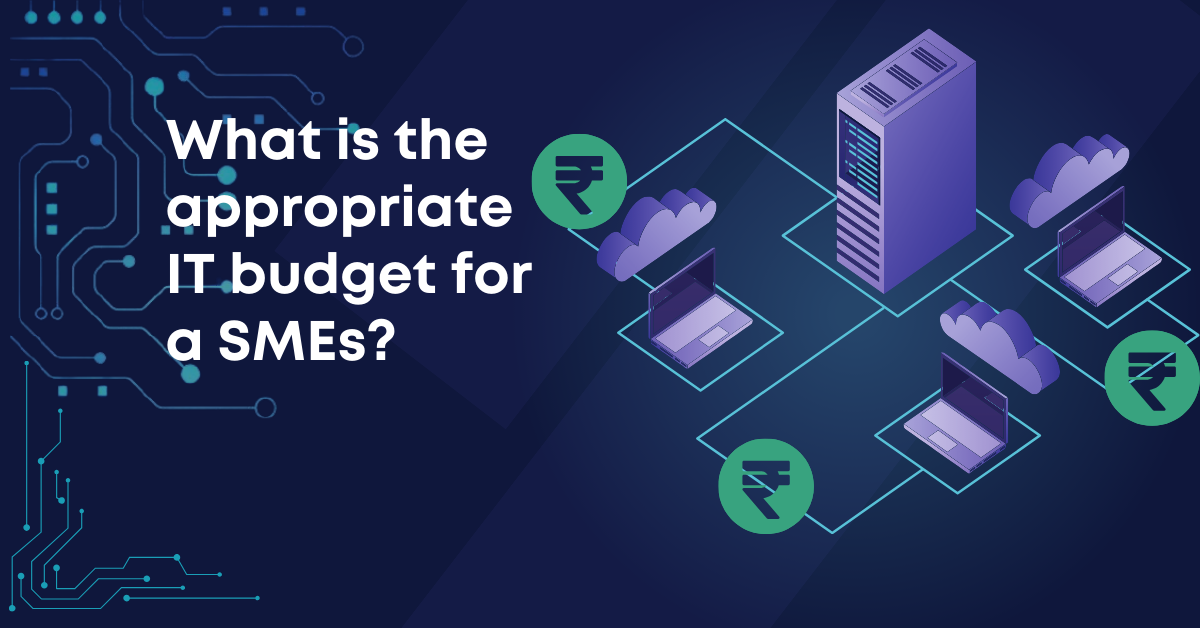
    It is no doubt essential for SMEs to keep a close eye on their budget to maintain financial stability and prepare for unforeseen circumstances. That being said, it is also beneficial to be aware of the constant tech advances happening around the world and keep up with these advances if you do not want to be left behind by the competition. So, the question arises: how does one determine IT expenditure?

    There is no straightforward answer, as every business has its own needs and requirements, and your budget will depend on these requirements. No two companies, not even within the same industry, will spend the same amount of money on IT.

    But one could get a clearer idea by looking at some case studies and observing how other companies of different budgets and scale, allocate their resources in the IT sector.

    According to one study done by Deloitte on technology budgets, the average spending on IT across all industries was 3.28 percent. The average came from considering a wide range of industries, with the lowest spender being construction at less than 2 percent and the biggest spender being banking and securities at 7 percent.

    Other studies that looked at the size of the business found that small and mid-sized businesses actually spent more on IT as a percentage of their revenue than large businesses. Small businesses spend around 6.9% of their revenue on information technology, while midsized businesses spend around 4.1% of their revenue on IT. For large companies, the percentage drops to 3.2%. The smaller percentage spent by larger companies is often the result of scale—they put so much money into IT that they get better rates, perform the work in-house, etc.

    It’s essential to note that these benchmarks should be used as a starting point and that companies should consider the factors that are specific to their business when determining their IT budget.

    Asking focused questions that help shed light on your true IT demands is a clearer approach to determine how much money should be spent on IT. These inquiries ought to cover the following:

    What are you spending on IT right now?
    Every business, no matter its size, needs an IT budget. To see how much you have been spending on IT, add up your expenditures on information technology over the past year.

    What are your business goals?
    Your IT investments should support you in achieving particular business goals. Your money would probably be better off being used for other aspects of your company or for other IT tools if it isn’t helping you meet your goals in a quantifiable way. A growing business will likely need to scale its IT infrastructure accordingly.

    What is your risk tolerance?
    Some businesses require more robust security measures than others. Consider how much you are willing to invest to mitigate potential security risks.

    What are your current IT pain points?
    Identify areas where your current technology is causing problems or inefficiencies. Addressing these issues can be a good use of IT funds.

    What is your industry standard?
    Further research on how much similar businesses in your industry typically spend on IT can be a helpful benchmark.

    Can you leverage existing technology more effectively?
    Before investing in new solutions, explore ways to get the most out of your current tools through training or optimization.

    Answers to these questions will help you come to a clear conclusion about your spending habits in SMEs.


    Studies mentioned in this article: https://www2.deloitte.com/us/en/insights/focus/cio-insider-business-insights/technology-investments-value-creation.html

    https://www.techtarget.com/searchcio/


  • Google’s Stand Against California

    Google’s Stand Against California

    google head quarters

    Google’s Stand Against California Legislation Sparks Debate Over News Compensation

    Google is taking action in response to proposed legislation in California, which would require big tech firms to compensate news outlets for their content. The tech giant announced on Friday, via a blog post, that it is removing links to California news websites as a “test” to assess the potential impact of the legislation on user experience. This move is expected to affect only a small percentage of California users.

    The proposed legislation, known as the California Journalism Preservation Act, is yet to be heard by the state’s Senate Judiciary Committee. If passed, it would mandate digital platforms like Google and Meta to pay a “journalism usage fee” to eligible news outlets when their content is used alongside digital advertisements.

    The bill has garnered attention amid concerns that news aggregation practices by tech companies may divert users away from news websites. Lawmakers and proponents argue that while tech giants benefit financially from sharing content from small and local news publishers, these publishers do not receive adequate compensation.

    Responding to Google’s action, California State Senate President Pro-Tempore Mike McGuire criticized it as “bullying” and an “abuse of power,” emphasizing the importance of news in keeping the public informed, especially during emergencies.

    Google has opposed similar legislation in other countries, including Canada and Australia. In these cases, the company threatened to remove links to news content from its platforms if the laws were enacted as proposed. However, Google eventually reached agreements with news publishers in both countries, avoiding the removal of links.

    Critics argue that Google’s actions suppress access to critical information and underscore the need for legislation to ensure fair compensation for news content. However, Google maintains that the proposed legislation would create uncertainty for businesses and has raised concerns about its feasibility.

    As discussions around the legislation continue, the implications for the future of news distribution and the relationship between tech companies and publishers remain at the forefront of the debate.

  • is cloud safe

    is cloud safe

    data safety with cloud

    Is Cloud Safe?

    When we save our data on the cloud, the lack of physical control over our cloud-stored data can be a cause for concern. Our sensitive files, irreplaceable photos, and videos reside on servers seemingly out of our reach, raising anxieties about their vulnerability to cyberattacks.
    However, it can be safer to entrust our data to reputable cloud service providers, as they offer a higher level of security than what we can achieve with personal computers. Hackers employ cunning tactics like malware and fraudulent emails to infiltrate our devices, potentially seizing control and holding our data hostage through ransomware attacks.

    Fortunately, the security measures implemented by large cloud service providers are likely to be far more comprehensive and sophisticated than the safeguards protecting our home computers and devices. These industry leaders invest heavily in robust security protocols designed to thwart even the most determined cybercriminals, providing a level of protection most home users simply cannot replicate on their own.

    When we store data in the cloud, it is stored on the servers maintained by the cloud service provider (CSP) we’ve selected. This CSP assumes the critical responsibility of constantly monitoring and actively responding to the ever-present security threats lurking within the vast expanse of their cloud infrastructure
    Cloud storage can be safe, but it’s essential to consider various factors to ensure the security of your data. Cloud security refers to safety guidelines, technology, and best practices used to protect sensitive data stored in the cloud from unauthorized access. While cloud providers implement security measures like consistent updates, AI tools, and encryption, there are still risks such as cyber attacks, data loss, loss of data privacy, and unauthorized access to data. To enhance cloud security, it’s crucial to choose reputable cloud storage providers, understand their security measures, and implement strategies like multi-factor authentication and regular password updates. Additionally, being cautious about phishing attempts and fostering awareness among users can further strengthen cloud security. Ultimately, ensuring data encryption, selecting secure cloud services, and being vigilant about privacy can help mitigate risks associated with cloud storage.

    This means it’s up to users—whether they’re businesses or individuals using a cloud-based service to follow best practices to protect their data in the event of data leakage or theft.

    How do Cloud providers protect your data?

    Consistent security updates
    Traditional user negligence, like ignoring security updates, can compromise your device. Cloud storage eliminates this risk, as cloud service providers constantly update their security measures.

    AI tools and auto-patching
    Cloud providers are leveraging AI to fortify data security. AI fills the gap in human expertise by automating initial security analysis. These AI programs continuously scan for vulnerabilities using built-in algorithms.

    Built-in firewalls
    Cloud providers utilize firewalls, digital guardians that function like security walls, to safeguard your data. These firewalls, either hardware or software-based, scrutinize incoming network traffic using pre-defined rules. Their purpose is to filter out malicious activity and keep your data secure, making it significantly harder for hackers to bypass the cloud provider’s security measures

    Redundancy (ultra-backed-up data)
    Access doesn’t have to be interrupted by hardware malfunctions or outages. Redundancy is a technique used by major cloud providers to create multiple copies of your data across geographically scattered data centres. Due to the smooth transition between servers, failsafe access is ensured.

    Third-party security testing
    To further fortify their defenses, cloud providers regularly engage external security firms to conduct penetration testing of their systems, ensuring they stay ahead of evolving cyber threats.

  • Digital Transformation for SME

    Digital Transformation for SME

    digital transformation

    Why small businesses should not ignore Digital transformation

    Amidst the profound shifts witnessed globally over the past decade, particularly in the aftermath of the COVID-19 pandemic, the concept of ‘digitalization’ has become increasingly prevalent. It has fundamentally transformed the operational landscape of businesses across all sectors, revolutionizing practices from recruitment to go-to-market strategies, as well as customer acquisition and retention.
    In an ever-evolving world, digitalization stands as a crucial stabilizing force, enabling businesses to cultivate resilience amid disruptions. It has empowered enterprises to leverage data for enhanced understanding of customer behaviors and real-time monitoring of competitors.

    What is Digital transformation?

    Digital transformation is the fundamental rewiring of how an organization operates. The goal of a digital transformation should be to build a competitive advantage by continuously deploying tech at scale to improve customer experience and lower costs.
    Digital transformation is critical for organizations to not only compete but survive. If leaders can’t be clear about what a digital transformation is—and align their organization around a specific program—they can’t expect to be successful.

    Benefits of digital transformation

    1. Increased Productivity
    Digitizing business operations, optimizing workflows, and enhancing information dissemination throughout your organization will lead to heightened employee productivity.
    A significant aspect of digital transformation involves consolidating platforms to eliminate data silos and automate manual procedures. By implementing suitable tools, employees can work more efficiently and allocate time to strategic endeavors.

    2. Improved customer experience
    An essential advantage of effectively undergoing digital transformation is the enhanced customer experience. Through digital tools and platforms, organizations can elevate customer interactions, offering smooth experiences across various channels. This strategy helps foster customer loyalty, boost retention rates, and ultimately stimulate greater sales.
    An instance of this is employing chatbots for swift and effective customer support, thus enhancing the overall customer experience.

    3. Greater agility and responsiveness
    Digital transformation helps businesses adapt swiftly to changing market conditions, business models, and customer demands. By digitizing operations and embracing agile approaches, businesses can readily adjust to new situations and seize opportunities. This flexibility allows businesses to better meet the evolving needs of their customers.

    4. Improve collaboration
    Digital transformation helps organizations communicate and work together better. When a company goes digital, it can easily share information within the organization, making sure everyone gives customers the same answers. This means faster communication, quicker responses, and keeping better records of what’s been decided and done. By improving how everyone sees and talks to each other, digital transformation boosts teamwork, responsibility, and how much work gets done.

    5. Better Data Insights
    Having lots of customer data is great, but it’s useless if your employees can’t use it. That’s why many companies are using analytics tools to understand their data better. A study by the Boston Consulting Group found that companies using big data will make 12% more money. By organizing your data and helping employees analyze it easily, your business can make better decisions and reach its goals faster.

    6. Cost Savings
    Many organizations spend a lot of time and money maintaining old systems. Switching to newer technology not only saves money upfront but also saves time and money in the long run. With the right software, like ERP Software, there are opportunities to save costs in operations. For instance, a company can better understand its raw material needs and order them more strategically, leading to savings.

    7. Data Security
    Digitizing data makes it safer than keeping paper documents because you’re less likely to lose it. Instead of needing a huge area to store paper, you can keep digital files on a small external hard drive that fits in a safe. This saves space, lowers costs, and reduces risks. Plus, digital files are encrypted and password protected, so nobody can access them without your permission. It’s also easier to find and access files electronically compared to rummaging through cabinets.

    8. Improved supply chain
    Supply chain issues have been a big problem for companies worldwide. They face problems like not enough workers, not enough equipment, and delays in getting things from one place to another. But there’s hope! Using digital technology can make things better. It helps companies see what’s going on, find ways to do things better and work together with other companies involved in the supply chain. It also makes tasks like guessing how much stuff they need, keeping track of what they have, and getting orders out faster much easier. Doing things digitally means less chance of mistakes, doing things faster, and making customers happier.

    Conclusion

    Digital transformation is a key way for businesses to grow and expand in the future. It helps small businesses stand out and keep up with their customers’ needs. If you ignore the importance of digital transformation, your business could be left behind by newer companies that embrace digital changes.

Login