Tag: Business

  • SEBI Takes Action Against SME for Alleged Financial Manipulation

    SEBI Takes Action Against SME for Alleged Financial Manipulation

    SEBI

    Sebi Takes Action Against SME for Alleged Financial Manipulation

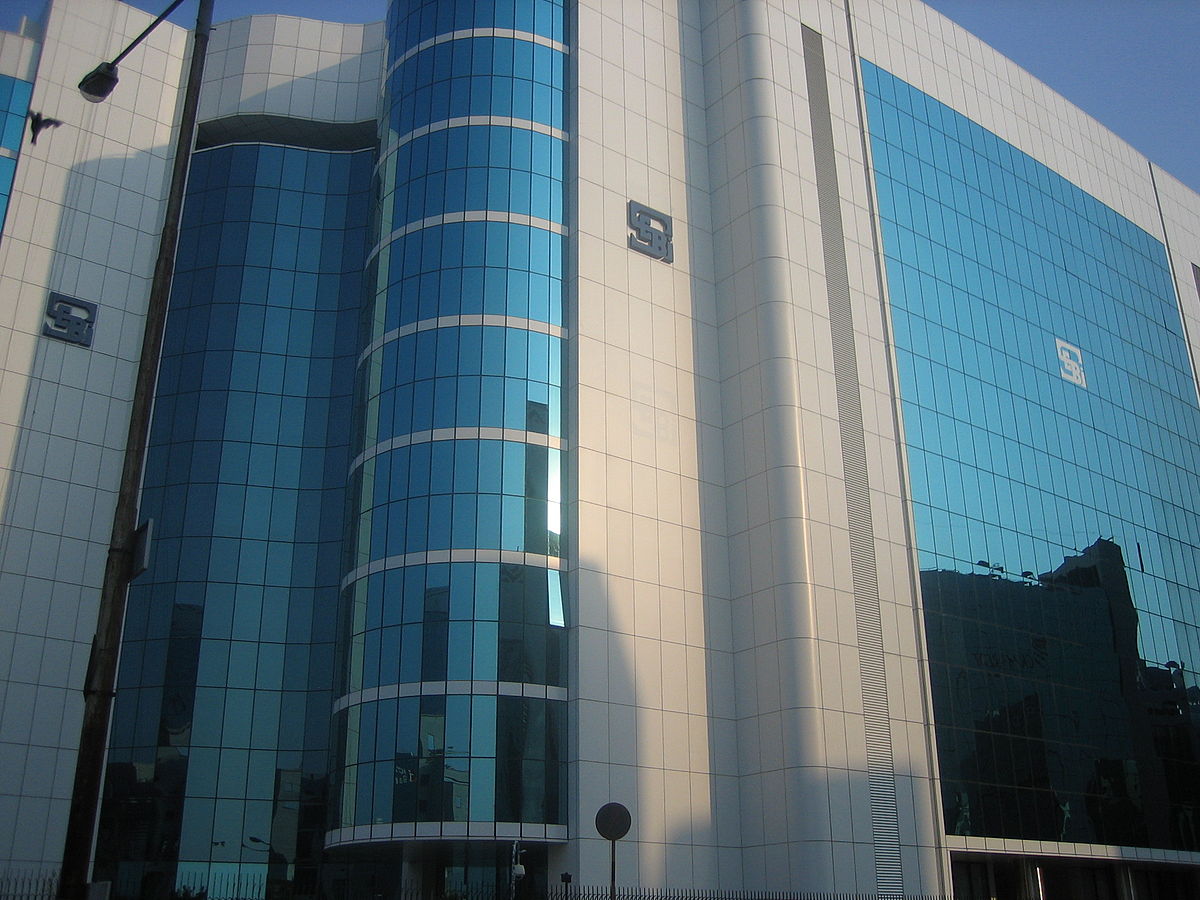
    On Monday, the Securities and Exchange Board of India (Sebi) issued sanctions against 12 entities, including Add-Shop E-Retail, a listed company, and several members of its promoter-management team, for purportedly manipulating financial statements.

    According to the Sebi order, the company engaged in fictitious transactions, including fake sales and purchase entries in its accounts. Over the past three financial years, more than 46% of reported sales were found to be fictitious. Furthermore, significant related-party transactions were conducted without audit committee approval.

    Add-Shop E-Retail was listed on BSE’s small and medium enterprise (SME) platform in September 2018 and later moved to the main board platform in October 2020. The promoter stake in the company decreased to 27.2% by December 2023, down from 62.99% in April 2020.

    This regulatory action coincides with increased scrutiny on SMEs for potential manipulation and heightened monitoring due to concerns about fraudulent activities in the sector.

  • India’s Services Sector Records Strongest Growth in Nearly 14 Years: PMI Data

    India’s Services Sector Records Strongest Growth in Nearly 14 Years: PMI Data

    India's service sector

    India’s Services Sector Records Strongest Growth in Nearly 14 Years: PMI Data

    India’s Services Sector Records Strongest Growth in Nearly 14 Years: PMI Data

    India’s services sector demonstrated robust growth in April, driven by strong domestic and international demand, which bolstered business confidence to a three-month peak, according to a survey released on Monday.

    The HSBC Services Purchasing Managers’ Index (PMI) for India eased slightly to 60.8 in April from 61.2 in March, with the preliminary estimate pegged at 61.7. Despite this moderation, the index remained one of the fastest growth rates observed in nearly 14 years, as stated in a press release by the firm.

    Since August 2021, the services sector has consistently maintained a level above the threshold of 50, indicating expansion rather than contraction.

    Similarly, data tracking India’s manufacturing sector also showed a moderation in April, with a PMI reading of 58.8. This softening in both manufacturing and services contributed to an overall Composite PMI reading of 61.5 in April, down from March’s eight-month high of 61.8.

    However, this reading still represented one of the highest levels observed in close to 14 years.

    India’s services sector remains dominant, with positive market conditions and strong demand driving the new business sub-index to its highest level in three months and the third-highest level in nearly 14 years.

    “India’s service activity expanded at a slightly slower pace in April, supported by a continued increase in new orders, particularly driven by robust domestic demand,” noted Pranjul Bhandari, Chief India Economist at HSBC.

    Business activity in finance and insurance witnessed significant growth, as indicated by the survey.

    Moreover, services companies experienced the second-fastest increase in new export business in nearly a ten-year period, with gains seen across Asia, Africa, Europe, the Americas, and the Middle East.

    “Although new export orders remained strong, they moderated slightly compared to March,” Bhandari added.

    Rising food prices and wage pressures resulted in increased cost burdens for survey respondents, prompting firms to pass on some of these costs to customers. The Consumer Services segment witnessed the sharpest increase in input costs, according to the survey.

    “In response to growing new orders, firms expanded their staffing levels, although the pace of hiring growth decelerated. Input costs continued to rise sharply, albeit at a slower pace than in March, leading to squeezed margins for service firms, as only a portion of the cost increase was transferred to clients through output charges,” Bhandari explained.

  • Extended Season of Down Rounds for Indian Startups

    Extended Season of Down Rounds for Indian Startups

    startup company

    Extended Season of Down Rounds for Indian Startups

    The trend of down rounds in the startup ecosystem is persisting and expanding. Nearly 20% of the major venture capital deals in 2023 and up to April this year involved significant reductions in valuations. This marks the highest proportion since 2015, according to data from Pitchbook.

    Before 2023, the highest incidence of down rounds occurred in 2017, when 17% of VC deals were executed with valuation cuts following the exuberance in funding observed during 2015-16. Analysts anticipate this trend to continue throughout the year, spelling challenging times for startups ranging from large unicorns to growth and early-stage ventures.

    Deepak Gupta, General Partner at WEH Ventures, explains, “Down rounds may continue for some time as the inflated valuations from 2020-21 have yet to align with company performance, and growth stage deals remain subdued compared to historical levels.” Gupta suggests that many founders who postponed fundraising in 2023 will now need to seek funding, potentially leading to down rounds.

    Of the 20 venture capital deals this year, primarily focused on growth and late-stage rounds, four have occurred at reduced valuations. In 2022, out of the 84 deals in growth and late-stage funding, 17 were down rounds.

    Recent funding rounds illustrate this trend. PharmEasy, an online pharmacy retailer, secured $216 million in a deal led by Ranjan Pai’s Manipal Education and Medical Group, valuing the company at $710 million — significantly lower than its $5.6 billion valuation in 2021. Similarly, Udaan raised $340 million in December 2023 at a valuation of approximately $1.8 billion, down from its peak of $3.2 billion in 2021.

    Indian startups witnessed a funding slowdown in the first quarter of this year, raising $1.9 billion compared to $2.2 billion in Q4 2023. This downturn followed consecutive growth quarters in 2023, with total funding amounting to $8.4 billion for the year, significantly lower than the $25 billion raised in 2022 and the lowest in the past five years, as per Tracxn data.

  • Do you know about various ways of Succession Planning for Family-Owned Business?

    Do you know about various ways of Succession Planning for Family-Owned Business?

    Family succession plan

    Do you know about various ways of Succession Planning for Family-Owned Business?

    Positive Facts to know about

    • India as a country is the 3rd largest in the number of family businesses.
    • 75% of publicly traded companies & 85% of private entities are family-owned.
    • 79% of India’s GDP is contributed by family-owned businesses which is the highest globally.
    • 60% of the Indian households are employed by the family-owned businesses.

    Hard Truth to know about

    • 45% of the family businesses have no formal channels of business communication.
    • Only 11% of families have a conflict resolution mechanism in place.
    • Merely 10% of the family businesses make it to the 3rd generation.

    Succession modes for Family-Owned Business

    1. Will – It is the most powerful document as it has all the power to supersede the Succession Laws prevalent for the time being in force. In the absence of the Will, it is the applicable Succession Law that will prevail. If any immovable property is passed through a will, then probate is mandatory provided that the immovable property is in Mumbai (Bombay), Chennai (Madras) & Kolkata (Calcutta). Nominations cannot over-rule a Will, so it is advised to have a nomination in line with a Will.
    2. Family Trust – It has a Settlor, Trustees & Beneficiaries. The trustees can be any Professionals. Trust can be revocable or irrevocable however advised to have irrevocable trust due to taxation benefits. Trust is a pass-through entity for taxation purposes. The trust can be a discretionary trust (where the share of the beneficiaries is not known) or a specific trust (where the share of the beneficiaries is known). Discretionary Family Trust brings flexibility to vary the distribution based on the desires of the Founder/Promoter. The trust is governed by the provisions of the Indian Trust Act, of 1882.
    3. Hindu Undivided Family (HUF) – Since December 2005, daughters are considered as Coparceners in the Father’s HUF is a very positive amendment that is not known to many so the Daughter can become Karta of the Father’s HUF provided the Father has no Son to become the Karta after his demise. Females cannot form HUF.
    4. Family Settlement Agreement (FSA) – It must be a family asset that is passed on through the generations. FSA is completely tax-free.

    For any queries & clarifications please feel free to reach out on + 91 – 9819880244 or info@bsga.in

    About the Author

    CA Bhavin S Gala, a Practicing Chartered Accountant based out in the financial capital of India, Mumbai has a decade of work experience with SMEs in the areas of Succession Planning, Family Governance, Corporate Law, Strategic Advisor to the Promoters and value Management Consultancy Services.

    Disclaimer

    The views expressed herein are solely those of mine and not of my Firm nor those of the ICAI or any of its committees. The ICAI and my Firm do not accept any responsibility for omission or inadequacy of the contents in this document and for loss caused to any person who acts or refrains from acting in reliance on the contents of this document irrespective of the cause of / reason for the loss.

  • Increasing Issuance of GST Demand Notices Driving Growth in GST Collections

    Increasing Issuance of GST Demand Notices Driving Growth in GST Collections

    GST tax

    Increasing Issuance of GST Demand Notices Driving Growth in GST Collections

    The surge in GST collections is partly attributed to the rising number of GST demand notices being issued to companies, prompting many to express their intention to appeal against these orders.

    Abhishek Jain, Partner and National Head of Indirect Tax at KPMG India noted, “The sustained growth in GST collections, with the latest figures marking the highest collection ever, reflects the strength of the domestic economy. Notably, the growth from domestic transactions at 13.4 percent outpaces that from imports at 8.3 percent. Another contributing factor to this growth could be linked to the deadline for GST audits and the consequent issuance of notices during this period.”

    Several companies have reported receiving GST demand notices from authorities, with many indicating their intent to challenge these orders.

    For instance, Apollo Tyres disclosed receipt of an order from the Sales Tax Officer, Delhi, under the GST Act demanding GST payment and imposing a penalty of Rs 13.94 lakh. The dispute concerns input tax credit (ITC) utilization and other matters, according to the company. Apollo Tyres stated, “The company intends to appeal before the Appellate Authority in due course. The impact of this matter on the company’s financials, operations, or other activities is not material.”

    Similarly, Crompton Greaves Consumer Electricals revealed receipt of an order from state tax authorities in Mumbai for the period from April 2018 to March 2019, imposing a demand of Rs 22.49 crore.

    “Considering the merits of the case, prevailing laws, and advice from consultants, the company plans to appeal against this order before the Commissioner (Appeals) and anticipates favorable outcomes from the appellate authorities,” the company stated.

  • Banks Extended Rs 24.6 Lakh Crore Credit to MSMEs in March: RBI Report

    Banks Extended Rs 24.6 Lakh Crore Credit to MSMEs in March: RBI Report

    Credit to MSME RBI

    Banks Extended Rs 24.6 Lakh Crore Credit to MSMEs in March: RBI Report

    According to the latest data from the Reserve Bank of India (RBI) on sectoral deployment, banks provided a gross credit of Rs 24.67 lakh crore to micro, small, and medium enterprises (MSMEs) under priority sector lending in March this year. This credit deployment witnessed a notable growth of 19.2 percent from Rs 20.69 lakh crore deployed in March 2023.

    The total bank credit to MSMEs under priority sector lending in March represented 15 percent of India’s non-food credit, amounting to Rs 164.11 lakh crore during the month.

    Breaking it down segment-wise, credit deployment to micro and small enterprises (MSEs) surged by 20.1 percent to Rs 19.76 lakh crore in March 2024 from Rs 16.45 lakh crore in the corresponding period of the previous year. Similarly, credit to medium-sized businesses grew by 15.8 percent to Rs 4.90 lakh crore from Rs 4.23 lakh crore during the same period.

    Despite the upward trajectory in bank credit to MSMEs, non-banking financial companies (NBFCs) remain at the forefront of credit support to MSMEs. According to a banking sector performance report in December last year, NBFC loans to MSMEs exceeded three times the loans extended by banks.

    Comparing the year-on-year growth in MSME credit by banks and NBFCs, as of March 2022 and March 2023, NBFCs demonstrated a robust growth rate of 21.2 percent and 42.4 percent, respectively, surpassing the growth rates of banks at 12.7 percent and 12.4 percent during the same periods.

    As of March 2023, services MSMEs held a dominant 66.6 percent share in NBFC credit to MSMEs compared to 33.4 percent for MSMEs in industries.

    However, one of the persistent challenges for MSMEs remains the lack of access to credit. A report by Lighthouse Canton, a global wealth and asset management company, highlighted that the development of digital public infrastructure (DPI) for digital products and services in a country has the potential to address nearly half of the credit gap faced by MSMEs in low and middle-income nations. Furthermore, the adoption of DPI could facilitate credit access for an additional 16-19 million MSMEs in these countries.

  • Why Family Disputes cause terrifying damage to the Family Business &; its valuation?

    Why Family Disputes cause terrifying damage to the Family Business &; its valuation?

    family business constitution

    Do you know why Family Disputes cause terrifying damage to the Family Business &; its valuation?

    It is because the Family Business is governed by strong ethos and family values, however, less attention is paid to the critical aspects such as Family Governance. Family Governance is the family constitution.

    Some of the known family disputes that are reported in the news &; the public are:

    • Gautam Singhania
    • Kirloskar
    • Hinduja Brothers
    • Murugappa
    • Ambani Brothers

    The Family Constitution is nothing but a translation of the intention of the family into a governing document that acts as a bridge between family members and business matters.

    Predominant Benefits of Family Governance

    • Bridge the gap between family values and corporate governance
    • Addresses family business dynamics
    • Promotes transparency
    • Prevention of conflicts
    • Preservation of unity
    • Wealth Management
    • Accountability
    • Creation of legacy

    Key Ingredients to Any Family Constitution

    • Family Vision
    • Governance Structure
    • Control & Management
    • Distributions
    • Capital Allocation

    For any queries & clarifications please feel free to reach out on + 91 – 9819880244 or info@bsga.in

    About the Author

    CA Bhavin S Gala, a Practicing Chartered Accountant based out in the financial capital of India, Mumbai has a decade of work experience with SMEs in the areas of Succession Planning, Family Governance, Corporate Law, Strategic Advisor to the Promoters and value Management Consultancy Services.

    Disclaimer

    The views expressed herein are solely those of mine and not of my Firm nor those of the ICAI or any of its committees. The ICAI and my Firm do not accept any responsibility for omission or inadequacy of the contents in this document and for loss caused to any person who acts or refrains from acting in reliance on the contents of this document irrespective of the cause of / reason for the loss.


  • CRISIL SME Tracker: Positive Shifts for Chemicals MSMEs

    CRISIL SME Tracker: Positive Shifts for Chemicals MSMEs

    Chemical MSME

    CRISIL SME Tracker: Positive Shifts for Chemicals MSMEs

    The outlook for the domestic chemicals industry is improving as demand rebounds and inventories stabilize.

    In the previous fiscal year, factors such as oversupply from China, weak demand in developed markets, and inventory adjustments led to subdued revenue growth.For the current fiscal year, Crisil Research expects the industry to rebound by 7-9% from a lower base.

    While certain segments like dyes and pigments, discretionary industries, and agrochemicals continue to face challenges, these are seen as temporary obstacles, and the medium- to long-term outlook remains optimistic.

    This positive outlook is particularly beneficial for the 292,856 micro, small, and medium enterprises (MSMEs) that constitute 30% of the domestic chemical industry (according to Ministry of Chemicals & Petrochemicals data), with significant clusters in Thane, Mumbai, and Ahmedabad. Nearly half of these enterprises are engaged in organic manufacturing, while others focus on dyes and pigments, soaps and detergents, with agrochemicals making up 8%.

    Among industry segments, specialty chemicals, representing 19-21% of the domestic industry, are expected to see margins rebound by 200-300 basis points this fiscal year after facing erosion last year due to high-priced inventories and lower product realizations.

    Within specialty chemicals, agrochemicals are projected to achieve 10-12% revenue growth this fiscal year after experiencing degrowth last year due to low prices and weak demand caused by El Niño and subsequent deficient rainfall. Agrochemicals margins are expected to normalize from the second quarter due to destocking of high-cost inventories.

    Colourants, another significant segment of specialty chemicals, are forecasted to achieve 4-6% revenue growth this fiscal year, driven by expectations of interest rate cuts in Europe and the US boosting discretionary spending. This follows a decline of 1-3% last year due to recessionary pressures and inflation affecting market sentiment.

    Overall, domestic producers may still face margin pressures as prices of key bulk materials could remain depressed due to ample supplies and the commissioning of newer capacities.

  • Considering Investment in Manufacturing? Opt for a Staggered Approach

    Considering Investment in Manufacturing? Opt for a Staggered Approach

    investment in manufacturing

    Considering Investment in Manufacturing? Opt for a Staggered Approach

    Financial planners are advising investors bullish on India’s manufacturing sector story to consider investing in HDFC Asset Management’s Manufacturing Fund, but they recommend spreading the investment over 12 months instead of making a lump sum investment at this time. First-time investors, however, may want to skip this fund launch.

    The NFO (New Fund Offer) of HDFC Manufacturing Fund, managed by Rakesh Sethia, is currently open and will close on May 10. Investors can start with as little as ₹100 in this fund, which will be benchmarked against the Nifty India Manufacturing TRI Index. An exit load of 1% will be charged for redemptions made within a month of investment.

    “Core sector manufacturing is poised for significant growth driven by government policies, technological advancements, and rising demand,” says Rajat Dhar, managing partner at Finogent Solutions. “Investors seeking to diversify their equity holdings beyond sectors like finance and technology can consider this fund and distribute their investments over the next 6-12 months.”

    At least 80% of the scheme’s portfolio will be allocated to shares of sectors such as capital goods, oil & gas, auto, healthcare, consumer durables, metals and mining, chemicals, textiles, and construction materials.

    Financial planners are cautioning new investors against rushing into thematic funds. “Investors should first build a core portfolio of diversified funds before exploring thematic funds,” advises S. Shankar, CFP, from Credo Capital.

    Originally posted on: https://economictimes.indiatimes.com/mf/analysis/bullish-on-theme-manufacturing-go-for-staggered-investment-plan/articleshow/109708560.cms?from=mdr

  • Responsible AI: Enabling Ethical Technology for a Trustworthy Future

    Responsible AI: Enabling Ethical Technology for a Trustworthy Future

    AI

    Responsible AI: Enabling Ethical Technology for a Trustworthy Future

    A significant proportion of AI professionals—approximately 61 percent—have encountered biases within AI systems, posing risks of perpetuating inequalities as businesses increasingly rely on AI-driven decisions.

    Artificial Intelligence (AI) is revolutionizing various sectors, with projections suggesting a substantial USD 15.7 trillion boost to the global GDP by 2030. However, recent findings from an Amazon survey reveal that 77 percent of respondents, including business leaders, acknowledge the potential risks associated with AI, underscoring the imperative for responsible development.

    Central to this issue is algorithmic bias. AI systems can inherit biases from their training data, leading to discriminatory outcomes in areas such as race, gender, and socioeconomic status. Unaddressed biases can result in adverse consequences like reputational damage, eroded trust, and financial repercussions.

    Explainable AI (XAI) has emerged as a pivotal principle in responsible AI development. XAI facilitates understanding of AI decision-making processes, enabling the identification and mitigation of potential biases. This transparency empowers stakeholders to uphold fairness and foster trust in AI systems.

    Responsible AI transcends technical capabilities; it encompasses embedding ethical principles and governance frameworks across the AI lifecycle—from development and deployment to utilization. This approach ensures that AI systems not only comply with legal regulations but also prioritize transparency, fairness, accountability, and privacy. Ultimately, responsible AI instills trust, unlocking efficiencies, driving innovation through novel business models, and enhancing customer experiences while delivering societal benefits.

    Achieving this vision necessitates collaboration among businesses, governments, and communities—a pivotal step in fostering responsible and inclusive AI adoption.

    Key Principles for Responsible AI Development:

    1. Purposeful: Align AI development with social good, emphasizing human well-being and ethical considerations.

    2. Ethical: Adhere to legal and ethical frameworks throughout the AI lifecycle, prioritizing transparency in data collection, model behavior, and decision-making.

    3. Human Oversight: Maintain human control in critical areas like fraud detection and high-risk decision-making to ensure accountability.

    4. Fairness and Bias Detection: Implement robust data quality checks and bias mitigation techniques, particularly in sensitive applications.

    5. Explainability: Leverage Explainable AI (XAI) to understand AI model decisions and build trust.

    6. Accountability: Establish robust auditing mechanisms to track human and machine actions within AI systems.

    7. Reproducibility: Ensure consistent and reliable AI model outputs by applying XAI principles throughout the development process.

    For startups, responsible AI is particularly crucial, as ethical lapses can disproportionately impact their reputation and growth in a competitive landscape. Initiating responsible AI practices early is essential, involving clear guidelines, diverse teams, and active feedback mechanisms to harness technology’s potential for good and cultivate stakeholder trust.
Login