Tag: Business

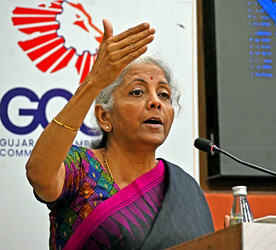
  • Finance Minister Nirmala Sitharaman: Industry Must Advance Up the Manufacturing Value Chain

    Finance Minister Nirmala Sitharaman: Industry Must Advance Up the Manufacturing Value Chain

    nirmala sitharaman

    Finance Minister Nirmala Sitharaman: Industry Must Advance Up the Manufacturing Value Chain

    Addressing a session on “Co-Creating the Future Responsibly: The Role of Business” at CII’s Annual Business Summit in New Delhi, Dr. V Anantha Nageswaran, Chief Economic Advisor, Government of India, emphasized the need to increase the share of manufacturing in the economy.

    “As India progresses from being the tenth largest to the fifth largest economy, aspirations rise along with such key milestones. It is important to recognize these aspirations and strive to meet them for a better standard of living,” he stated.

    Dr. Nageswaran highlighted several key priorities for achieving developed nation status, including improvements in human resource development, which are critical for higher economic growth. He emphasized the importance of cities as ecosystems for attracting talent and fostering entrepreneurship, innovation, and creativity. Converting India’s Tier 2 and Tier 3 cities into engines of growth, improving learning outcomes, preparing the youth for AI adoption, and focusing on physical health were identified as key focus areas.

    He stressed the creation of a vibrant small and medium enterprises sector, known as ‘Mittlestand’, and highlighted the importance of deregulation and lighter compliance burdens for MSMEs. Addressing factors of production such as land and labor markets and making power generation and distribution economically viable were also emphasized.

    Dr. Nageswaran pointed out the need for dialogue and consensus building with stakeholders to implement next-generation reforms amidst challenges from geopolitical fragmentation and climate change. He emphasized the importance of macroeconomic stability, prudent and sustainable government finance, and improved credit ratings, especially given the high geopolitical risks.

    He cautioned against taking the global environment for granted, citing risks such as geopolitical fragmentation, the impact of US fiscal policy and interest rates, China’s dominance in global manufacturing, and global financial stability. He stressed that the government cannot address these challenges alone and that private sector support is critical for societal advancement and a faster energy transition.

    Dr. Nageswaran also stressed the importance of social responsibility in innovations, including AI’s impact. He reiterated that Corporate Social Responsibility is integral to corporate responsibility, and meaningful actions across all areas are crucial for responsibly co-creating the future. (ANI)

  • TGIF Agribusiness Makes Strong Debut on BSE SME Platform with 61% Premium

    TGIF Agribusiness Makes Strong Debut on BSE SME Platform with 61% Premium

    TGIF-Agribusiness

    TGIF Agribusiness Makes Strong Debut on BSE SME Platform with 61% Premium

    TGIF Agribusiness made its debut on the BSE SME platform on Wednesday with shares opening at Rs 150, representing a premium of 61% over the issue price of Rs 93 per share.

    Prior to its listing, the company’s shares were trading at a premium of Rs 30 in the unlisted market.

    The Initial Public Offering (IPO) consisted of a fresh equity issue of 6.87 lakh shares and was oversubscribed 37 times due to strong interest from investors.

    The proceeds from the IPO will be utilized for purchasing agricultural equipment and irrigation systems, meeting working capital requirements, and for general corporate purposes.

    TGIF Agribusiness primarily operates as a horticulture company engaged in open farming of fruits and vegetables across more than 110 acres of farmland in Ajari, Kasindra, and Kojra villages.

    Pomegranate farming constitutes over 95% of the company’s revenue, supplemented by cultivation of dragon fruits, Sagwan trees, lemon, watermelon, and chilly in recent years.

    The company employs various farming techniques to ensure high-quality produce, such as fruit thinning to enhance crop size and quality, vegetative growth practices, fruit protection measures, and soil moisture management.

    The agriculture sector in India, boasting the world’s second-largest agricultural land, plays a pivotal role in employing nearly half of the country’s population, making farmers essential contributors to our sustenance.

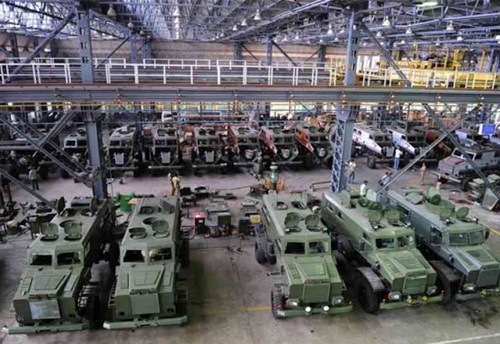
  • The Uttar Pradesh government aims to attract investments of Rs 5,000 crore for the Defence Manufacturing

    The Uttar Pradesh government aims to attract investments of Rs 5,000 crore for the Defence Manufacturing

    Defence Industrial Corridor (UPDIC)

    The Uttar Pradesh government aims to attract investments of Rs 5,000 crore for the Defence Manufacturing

    The Union Environment Ministry has granted approval for the development of 60 hectares of land dedicated to the Uttar Pradesh Defence Industrial Corridor (UPDIC) in Chitrakoot.

    According to the Expressway Industrial Development Authority (UPEIDA), this approval will facilitate projects worth Rs 5,000 crore, potentially creating 100,000 job opportunities in Chitrakoot.

    A significant portion of Chitrakoot will be reserved as a greenbelt, and developers will incorporate modern measures for energy conservation, waste management, firefighting, and controlling noise, water, and air pollution. The UPDIC encompasses six nodes across Lucknow, Kanpur, Jhansi, Aligarh, Chitrakoot, and Agra districts.

    “This corridor is crucial for advancing the ‘Make in UP’ initiative of the Yogi Adityanath government and contributing to India’s military self-reliance and exports,” said a government official. The corridor will focus on producing drones, helicopters, arms, and ammunition.

    The state government has already approved defence manufacturing projects worth Rs 25,000 crore and signed 140 memorandums of understanding (MoUs) with both public and private companies. These MoUs include agreements with Adani Defence and Aerospace, BrahMos Aerospace, Ancor Research Labs, Tata Technologies, Bharat Dynamics Limited, Delta Combat Systems, SpiceJet Technic, Verivision, HAL, Gliders India, Defence Research & Development Organisation, Aerolloy Technologies, and others.

    The Expressway Authority plans to acquire nearly 5,000 hectares for UPDIC, with about 1,700 hectares already acquired and allotted to investors. Additionally, approximately 1,000 hectares have been allocated to investors in Jhansi for developing a hub dedicated to arms and ammunition production and testing, with Bharat Dynamics as the lead investor in Jhansi.

  • AI Spending Trends in India: BFSI and Manufacturing Lead Investment

    AI Spending Trends in India: BFSI and Manufacturing Lead Investment

    AI

    AI Spending Trends in India: BFSI and Manufacturing Lead Investment

    Artificial Intelligence (AI) spending in India is poised to triple to $5 billion by 2027, with the banking, financial services, and insurance (BFSI) and manufacturing sectors emerging as top industry spenders, as per an Intel-IDC report released on Tuesday.

    The report highlighted the BFSI sector’s transition from robotic process automation (RPA) to AI-driven automation, emphasizing areas such as security, productivity, and customer experience (CX). Advanced AI solutions incorporating behavioral analysis and fraud detection represent a shift towards more sophisticated and adaptable systems.

    Sharath Srinivasamurthy, Associate Vice President at IDC, addressed the primary challenges hindering AI adoption in India, citing unclear or lower-than-expected business outcomes and compliance issues as the top concerns.

    Additional challenges identified include skill shortages, high ownership costs that are difficult to justify, and process-related issues stemming from inadequate organizational support to coordinate cross-functional initiatives.

    Santhosh Viswanathan, Vice President and Managing Director of Intel India Region, emphasized India’s readiness for AI adoption, citing the country’s role as a significant producer of global data and its position as the third-largest global market. He noted India’s leadership in technical skill availability on a global scale.

    The IDC Asia/Pacific AI Maturity Study 2024 classifies India as an AI Practitioner (stage 2), with the country exhibiting strong potential in AI adoption. The report indicates that India’s performance aligns closely with the Asia/Pacific region average in the enterprise dimension, surpasses in the government dimension, and slightly lags in the socio-economic dimension.

  • Healthcare and Advanced Manufacturing Set for Major Investments in 2024

    Healthcare and Advanced Manufacturing Set for Major Investments in 2024

    Healthcare and Advanced Manufacturing

    Healthcare and Advanced Manufacturing Set for Major Investments in 2024

    New Delhi, May 14: Traditional sectors like healthcare and advanced manufacturing are poised to attract substantial investments in 2024. According to the India Private Equity Report by Bain and Company, a global management consulting firm, investors are showing strong support for established business models with significant long-term growth potential.

    In 2023, sectors such as healthcare and advanced manufacturing demonstrated resilience and gained market share, with these sectors accounting for 75 percent of the total investments. Healthcare investments surged to a record high of USD 5.5 billion in 2023, driven by a threefold increase in deals compared to 2022. Major transactions involved multi-specialty hospitals, including Manipal Hospital’s significant growth of 2.7 times over FY2021-23 and acquisitions of Columbia Asia and Vikram Hospitals.

    The report predicts robust deal activity in healthcare and advanced manufacturing across various sub-segments in 2024. Healthcare is expected to witness continued investment in multi-specialty and single-specialty hospitals, along with multiple-scale pharma and med-tech deals.

    Most traditional sectors remained resilient as investors maintained interest in mature businesses with strong long-term growth prospects. Five megadeals in this segment attracted total investments exceeding USD 1 billion and included entities like Manipal Hospitals, Reliance Retail, HDFC Credila, Adani Power, and Avaada Group. The consumer retail, healthcare, and energy sectors experienced robust growth of over 10 percent driven by these investments.

    Advanced manufacturing investments achieved a 20 percent compound annual growth rate (CAGR) over 2021-23, propelled by supply chain diversification, government incentives like the Production Linked Incentive scheme, and an influx of scale assets into the market. Significant investments were made in electric vehicle OEMs, with EV penetration increasing to over 6 percent in 2023 from 1 percent in 2019.

    In 2024, increased investments are expected in packaging, electronics, and EV sectors within advanced manufacturing. Electronics manufacturing is expanding rapidly with government support, and EV penetration is on the rise in India.

    However, investments in the IT/ITeS sector declined, with a 65 percent decrease due to elevated valuations and subdued demand in end markets. Similarly, investments in SaaS and new-age tech sectors declined by 60 percent as investors focused more on profitability and sustainable business models.

    The fintech sector also experienced a decline in 2023 due to regulatory constraints, rising non-performing assets (NPAs) in small-ticket loans, and uncertainty regarding the path to profitability.

    Consumer tech deal activity continued to decline as investors exercised caution and pulled back from large investments in businesses with unproven economics. (Agencies)

  • Why do people hate the new apple ad?

    Why do people hate the new apple ad?

    Why do people hate the new Apple ad?

    Apple has recently come out with an ad for their latest product, the ultra-thin iPad Pro. The ad features a large number of objects of creative and cultural significance, like a record player, a typewriter, piano, a TV, trumpet, guitar, cameras, books, paint cans and tubes, and an arcade game machine — all getting crushed together inside an industrial press.

    Suffice to say, this did not sit well with many people

    apple ad

    The ad  titled ‘Crush’ showed a giant press crushing instruments and art supplies, which clashed with the iPad’s usual image as a tool for artistic expression.

    Viewers felt the ad not only failed to inspire creativity but actively disrespected artistic endeavors and the value placed on physical creative tools.

    The negative undercurrent went even further for some, who interpreted the ad as promoting a purely digital creative workflow. This sparked concerns about neglecting the importance of traditional creative mediums and the tactile experience they offer. The backlash was swift and strong. Several celebrities, such as Hugh Grant and Hrithik Roshan also voiced their disappointment and anger over the ad, criticizing the it for its negativity and its seeming disconnect from the core values Apple typically represents. 

    The backlash reached to such heights that Apple was forced to apologize and pull the ad altogether.

    Some say that Apple was always aware that this ad heavily relies on shock value, but ultimately they may have bitten off more than they could chew.

    Read more here: https://www.hindustantimes.com/entertainment/bollywood/hrithik-roshan-calls-apple-s-controversial-new-advertisement-sad-and-ignorant-101715353786737.html

  • Innovation and Sustainability Showcased on National Technology Day

    Innovation and Sustainability Showcased on National Technology Day

    National Technology Day

    Innovation and Sustainability Showcased on National Technology Day

    The celebration of National Technology Day 2024, organized by the Technology Development Board (TDB) under the Department of Science and Technology, took place on May 11th at the INSA Auditorium in New Delhi. The event centered around the theme of ‘Promoting Clean and Green Technologies for a Sustainable Future’ and brought together distinguished scientists, dignitaries, and thought leaders with the shared goal of advancing towards a cleaner, greener, and more resilient nation.

    During the event, Prof. Ajay Kumar Sood, the Principal Scientific Advisor to the Government of India, emphasized the importance of initiatives like the National Electric Mobility Mission Plan (NEMMP) and Faster Adoption and Manufacturing of Hybrid and Electric Vehicles (FAME) in reducing greenhouse gas emissions through the promotion of electric vehicles (EVs). He highlighted the EV Mission led by the Prime Minister’s Science, Technology Innovation and Advisory Council (PM-STIAC), aimed at establishing supportive standards and frameworks for EV adoption.

    Prof. Sood also highlighted the strategic significance of the National Hydrogen Mission in India’s journey towards achieving a net-zero target by 2070, stressing substantial investments in green hydrogen production. He emphasized ongoing efforts in Carbon Capture Utilization and Storage (CCUS) technologies, aimed at optimizing costs and expanding industrial applications to further India’s sustainability objectives.

    In the context of enhancing India’s technological frameworks and policies for sustainable development and meeting international climate goals, Prof. Sood emphasized the importance of consultative groups and international collaborations, such as OPSA’s partnership with Rocky Mountain Institute (RMI) on Zero Emission Trucking.

    Addressing the audience, Prof. Abhay Karandikar, Secretary of DST, highlighted the pivotal role of innovation in national development, emphasizing the need to foster a culture of innovation and provide opportunities for individuals to contribute to the nation’s progress. He underscored government initiatives in funding research and development programs and nurturing innovation through schemes like NIDHI and TDB, which focus on incubating startups and fostering entrepreneurship.

    Prof. Karandikar stressed the integration of technology into policy frameworks to drive progress, highlighting collaborations with line ministries towards sustainability goals. With a vision for achieving net-zero carbon emissions by 2070, he aspired for India to become a global leader in sustainability efforts.

    The event also featured a keynote address by Padmashri Prof. G.D. Yadav, advocating for sustainable solutions and technological innovations to achieve net-zero carbon emissions by 2070. He emphasized the potential of white and green hydrogen and proposed innovative approaches such as waste-to-wealth factories, hydrogenating plastic, and battery recycling.

    Sh. Rajesh Kumar Pathak, Secretary of TDB, highlighted pivotal projects funded by TDB, emphasizing the critical role of these technologies in promoting environmental stewardship.

    Prof. Ashutosh Sharma, President of INSA and Former Secretary of DST, emphasized the essential role of technology in achieving sustainability goals, urging policymakers and stakeholders to prioritize technology initiatives that focus on electric vehicles (EVs), green hydrogen, carbon capture, and energy-efficient habitats to combat climate change and promote sustainable development.

    Additionally, the event showcased 23 students representing 20 projects selected to compete in the Regeneron International Science and Engineering Fair (ISEF). These finalists will represent India at the prestigious fair in Los Angeles, California, USA, from May 11-17, 2024, where they will engage with over 1,600 young science enthusiasts from 60+ countries and showcase innovative projects on a global stage.

  • OpenAI’s new search engine

    OpenAI’s new search engine

    OpenAI’s new search engine may change marketing

    open ai

    Open AI has been changing the way users browse the web. Imagine users asking questions in a natural way, just like they would a friend. OpenAI’s search engine might be built for this conversational approach, requiring marketers to adapt their content to sound natural and answer real user questions.

    Excitement is building for OpenAI’s search engine, and it has the potential to disrupt the search landscape as we know it. However, some questions linger. Can OpenAI make money with this new service? And can it truly compete with the mighty Google? One thing’s for sure: the search engine world is a hotbed of innovation and fierce competition, and OpenAI’s arrival just adds another layer of intrigue.

    Marketers might need to track new metrics to understand how users find and engage with their content in this new search landscape.

    AI search engines might throw SEO for a loop These new search engines, unlike their traditional counterparts, may value different things. They could prioritize content written in a more conversational style, focus on new ranking signals we haven’t seen before, or even interpret what users are really looking for in a completely different way. Since AI can understand and create human-like text, content that directly answers users’ questions in a natural, conversational way might be the key to ranking highly.

    OpenAI’s search engine could change the search game Google has been the undisputed king for ages, but if OpenAI takes off, it could shake things up big time. Marketers will need to ditch their “all eggs in one basket” approach and start spreading their SEO efforts across different platforms to stay competitive.

    Overall, OpenAI Search presents both challenges and opportunities for marketers. Being adaptable and creative will be key to success in this evolving search landscape.


    To learn more, read here: https://www.cmswire.com/digital-marketing/what-openai-search-would-mean-for-marketers/

  • New MSME payment clause in IT Act

    New MSME payment clause in IT Act

    supreme court

    New MSME payment clause in IT Act

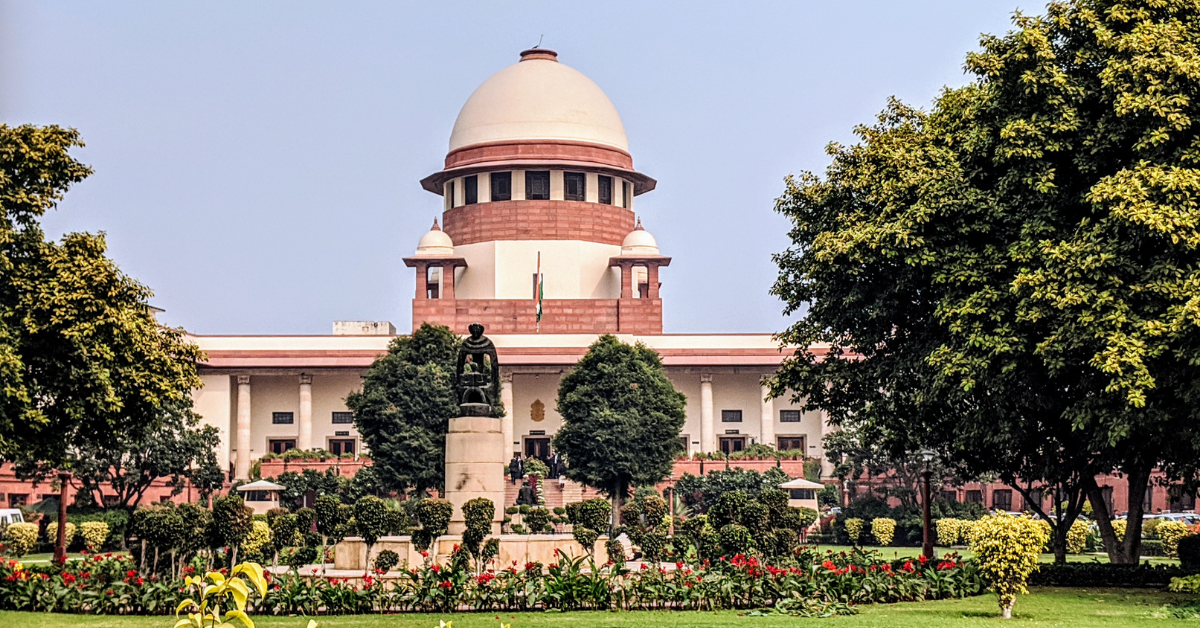
    The Supreme Court declined to hear a petition filed by traders’ associations challenging the constitutionality of Section 43B(H) of the Income Tax Act, which mandates businesses to clear dues owed to micro, small, and medium enterprises (MSMEs) within 45 days to avail tax benefits.

    Instead, a bench headed by Chief Justice DY Chandrachud advised the petitioners – Federation of All India Vyapar Mandal, Federation of Madras Merchants and Manufacturers Association, and Confederation of West Bengal Trade Associations – to seek relief from the high court.

    The provision came into effect on April 1. The Federation of All India Vyapar Mandal challenged the constitutionality of Section 43B(H), highlighting its adverse impact on the business community, especially MSMEs like textile, chemical, and engineering units based in Gujarat.

    The traders’ body sought a review of the provision due to its negative implications on MSMEs, arguing that it unfairly favors medium-scale industries by granting them more leeway in extending credit, thereby causing MSMEs to lose market share. Traders also alleged that the amendment unfairly penalized small enterprises by restricting their ability to offer credit based on their discretion.

    The petition further pointed out that large companies were redirecting their orders away from MSMEs registered under the Micro, Small, and Medium Enterprises Development Act, 2006, opting instead to place them with unregistered entities to evade mandatory provisions and maintain longer payment cycles of 90-120 days.

    To address working capital shortages and ensure timely payments within the sector, the Finance Act 2023 introduced an amendment to the Income Tax Act by adding clause (h) to Section 43B. This clause mandates that buyers settle outstanding payments owed to MSMEs within 45 days to qualify for tax deductions. Failure to comply results in disqualification from tax benefits until the dues are settled.

    In cases of delayed payments to MSMEs, the buyer is liable to pay tax on the overdue amount, which can only be reversed upon clearing the dues to MSMEs. Additionally, interest on the overdue amount accrues at the bank rate notified by the Reserve Bank of India, applicable from the appointed day or an agreed date.

  • How Lenders Navigate Risk in MSME Lending Without Credit History

    How Lenders Navigate Risk in MSME Lending Without Credit History

    Credit risk

    How Lenders Navigate Risk in MSME Lending Without Credit History

    Lending to small and unorganised businesses presents significant credit risk, primarily due to the absence of credit history for assessment. Traditional methods of credit evaluation, such as predicting behavior based on credit history or analyzing cash flows and profitability through financial statements, often fall short in this scenario.

    Shikhar Aggarwal, Chairman of BLS E-Services, underscores the importance of identifying and mitigating risks like credit default and market volatility. This approach not only ensures the stability of loan portfolios and minimizes losses but also promotes responsible lending practices. Aggarwal emphasizes that proactive risk management is crucial for MSMEs to demonstrate financial reliability and business acumen, essential for securing funding, growth, and operational success. Moreover, a robust risk management framework builds trust with financial institutions, improving loan terms and access to larger credit facilities, enabling MSMEs to innovate, expand, and navigate economic challenges effectively.

    Ujual George, COO of Aye Finance, explains how his company overcame this challenge by developing a tailored underwriting model based on data science and a comprehensive physical presence. Aye Finance’s extensive workforce of 6,000 across 450+ branches nationwide plays a critical role in managing credit risk effectively through this “phygital” (physical + digital) model.

    Aggarwal further elaborates on the multifaceted approach NBFCs use to manage risks during lending. This includes assessing liquidity profiles with seasonally adjusted fund utilization patterns, evaluating company profiles based on ownership, industry segment, location, and maturity level, analyzing repayment behavior and asset classification, determining creditworthiness through outstanding debt and credit scores, assessing collateral for secured credit, and considering external factors like economic conditions, business trends, and potential legislative changes that may impact MSMEs.

Login